

Practical guide to quickly find the size that best suits your needs between 10 and 14 inches. This short guide helps you balance portability, playing comfort, and tone.
A small model fits in a bag and often weighs less than 2 kg. A large model has a bigger resonance chamber, producing deeper bass notes and a relaxing sound.
To choose, think about where you will play (at home, outdoors, or in a group), the style of music you play, and the scales you want to learn. The number of notes affects complexity: 8 to 10 notes suit beginners, while 11 to 12 notes or more offer more scope for melodies.
Budget and tuning also matter. A 440 Hz reference pitch makes it easier to play in a group; 432 Hz is often chosen for wellness practices. The following sections cover the resonance chamber, the relationship between diameter and number of notes, and practical pointers for a lasting choice.
To learn more, see this selection guide.
Why size matters for your tongue drum
The size of your instrument directly affects how comfortable it is to use every day. It determines how easy it is to carry, how tiring it is to play, and the character of its resonance.
Portability, weight, and bulk
A model under 25 to 30 cm fits in most bags and often weighs 2 kg or less.
Beyond that size, its bulk and weight increase noticeably. Walking or taking the subway with a larger instrument becomes less convenient.
How the resonance chamber affects sound
A larger chamber produces stronger bass notes and longer resonance, ideal for an immersive atmosphere.
Smaller diameters favor higher registers and a crisp attack, useful for rhythmic patterns and arpeggios.
“Try models of similar sizes to hear the difference in projection and resonance.”
- With the same diameter, more tongues means less space between them and can cause notes to interfere with one another.
- A larger format can accommodate more notes or reach a lower register without increasing the number of tongues.
- Match the size to your needs: mobility, an immersive atmosphere, or a balance of both (10 to 14 inches).
| Aspect | Small format | Medium format | Large format |
|---|---|---|---|
| Portability | Very high | Good | Moderate |
| Register | High, crisp attack | Balanced | Low, long resonance |
| Number of notes | Often limited | Varies | Room for additional notes |
| Recommended use | Travel, street performance, first steps | Home, studio | Atmosphere, relaxation, concerts |
To refine your choice, try models of similar sizes and consult this selection guide.
10- to 14-inch tongue drums: choosing the right size
Size affects both playing comfort and the depth of the resonance. Here is a short guide to comparing two common size ranges and making a choice that suits the way you play.
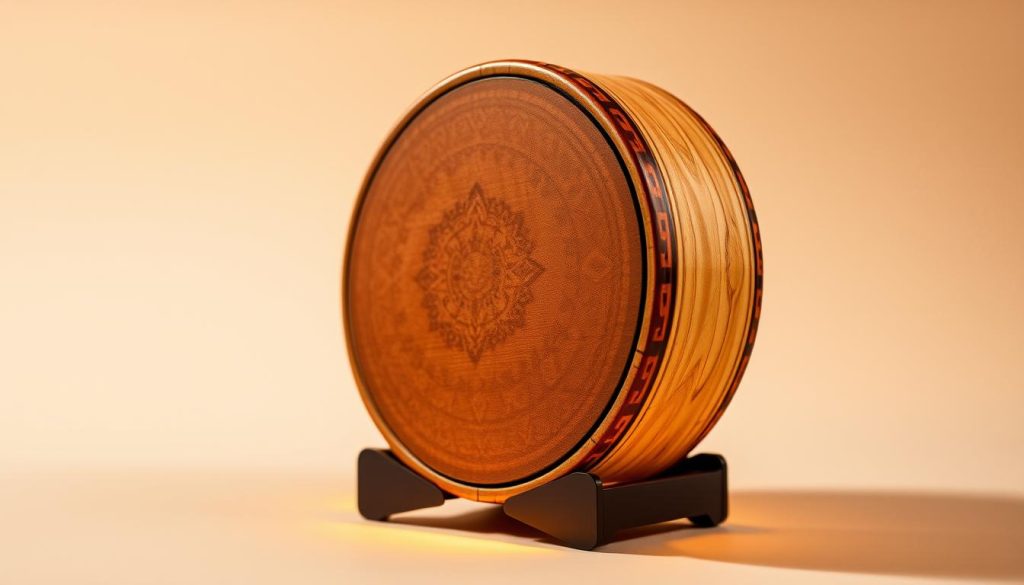
10 to 12 inches: higher notes, intuitive playing, easy transport
Models measuring 10 to 12 inches are generally under 30 cm across and weigh 2 kg or less, making them easy to carry. They favor higher tones and suit fast patterns and workshops.
These models are ideal for playing outdoors, during spontaneous sessions, or in lessons. Be aware that a large number of tongues on a small drum can cause interference between notes.
13 to 14 inches: lower register and deep, soothing tones
A wider chamber produces stronger bass notes and longer resonance. For an instrument intended for contemplative playing indoors, this size offers long, relaxing tones.
It can also reduce interference and provide more room for your hands.
Which size suits the home, studio, or outdoors?
Indoors, choose a 13- to 14-inch model if you want deeper bass. Outdoors, choose a 10- to 12-inch model that is easier to carry, and protect your instrument with a good-quality case.
Try a 12-inch model and then a 14-inch model to hear the difference in projection and bass response.
How diameter relates to the number of tongues and notes
The arrangement of the tongues determines how many notes are available and how they interact.
On a small drum, a large number of tongues leaves less space between them. Vibrations from one tongue can then pass slightly to its neighbors. This effect colors the note being played and can create acoustic interference.
In practice, 8 to 10 notes remain ideal for gradual learning and for children. With 11 to 12 notes or more, you can play more familiar melodies. Adult beginners can aim for up to about 15 notes; configurations beyond that are generally better suited to experienced musicians.
A large number of tongues on a small drum increases manufacturing complexity and price. Some players enjoy the harmonic richness created by interference; others prefer purer notes.
Choose the repertoire you want to play first (improvisation or melodies), then try instruments with a similar number of notes but different diameters.
- Rule: the closer the tongues are, the greater the risk of interference.
- Tip: choose 8 to 10 notes to get started, or 11 to 12 to play familiar tunes.
- Suggestion: compare quality, tuning stability, and the playing comfort provided by tongue spacing before buying.
Choose by use: relaxation, familiar melodies, or group playing
How you plan to use it determines whether you need enveloping bass or an instrument that is easy to carry. For relaxation, favor rounded tones, minor modes, and slow tempos.

Wellness enthusiasts sometimes choose 432 Hz because they perceive its vibrations as gentler. Larger diameters favor long resonance and lower tones that can accompany breathing during a session.
Playing familiar melodies
If you want to play nursery rhymes and popular songs, aim for 11 to 12 notes or more in a diatonic scale. This makes it possible to play most tunes and reproduce melodies more faithfully.
Playing with others
For group playing, the standard reference pitch of 440 Hz is essential. Mixing instruments tuned to 432 Hz and 440 Hz creates unpleasant pitch clashes.
- Decision guide: deep relaxation → large format and minor modes.
- Familiar melodies → 11 to 12 notes or more, diatonic scale.
- Group playing → 440 Hz for a consistent sound.
- Children → lightweight model with notes that are easy to identify.
| Use | Recommendation | Benefit |
|---|---|---|
| Relaxation and yoga | Minor modes, 432 Hz, large format | Long resonance, warm tones |
| Familiar melodies | 11 to 12 notes or more, diatonic scale | Can play most popular tunes |
| Group playing | 440 Hz, easy-to-carry model | Easy to combine with other instruments |
Practical tip: if you are unsure, choose a versatile model (medium size, 9 to 11 notes, tuned to 440 Hz).
Scales and modes: major, minor, pentatonic, diatonic, or chromatic
The choice of scale immediately shapes the mood and tone. Major modes create a bright atmosphere. Minor modes sound more melancholy.
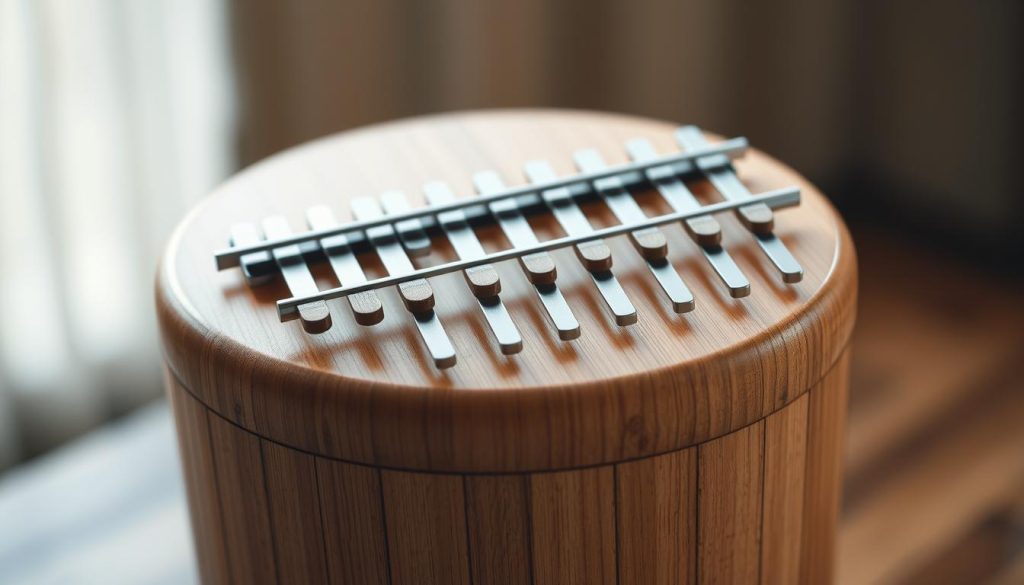
- Pentatonic: 5 notes, useful for intuitive improvisation without clashing notes.
- Diatonic: 7 notes (C through B), ideal for playing familiar melodies.
- Chromatic: 12 notes, including sharps and flats for maximum versatility.
For learning, C, D, or F major scales are straightforward starting points and work well with teaching resources.
The scale is usually fixed on this instrument, so it is best to choose one that inspires you when you buy it.
Consider both the scale and the size: a pentatonic scale on a small drum sounds light and airy. A diatonic scale on a larger drum gains fullness and resonance.
| Scale | Notes | Recommended use |
|---|---|---|
| Pentatonic | 5 | Improvisation, beginners, group sessions |
| Diatonic | 7 | Popular melodies, learning |
| Chromatic | 12 | Advanced music, complex arrangements |
Materials and finishes: steel, stainless steel, painted steel, and alloys
The choice of metal affects both your instrument’s durability and its tone. A painted surface often gives a rounder sound and protects against corrosion.
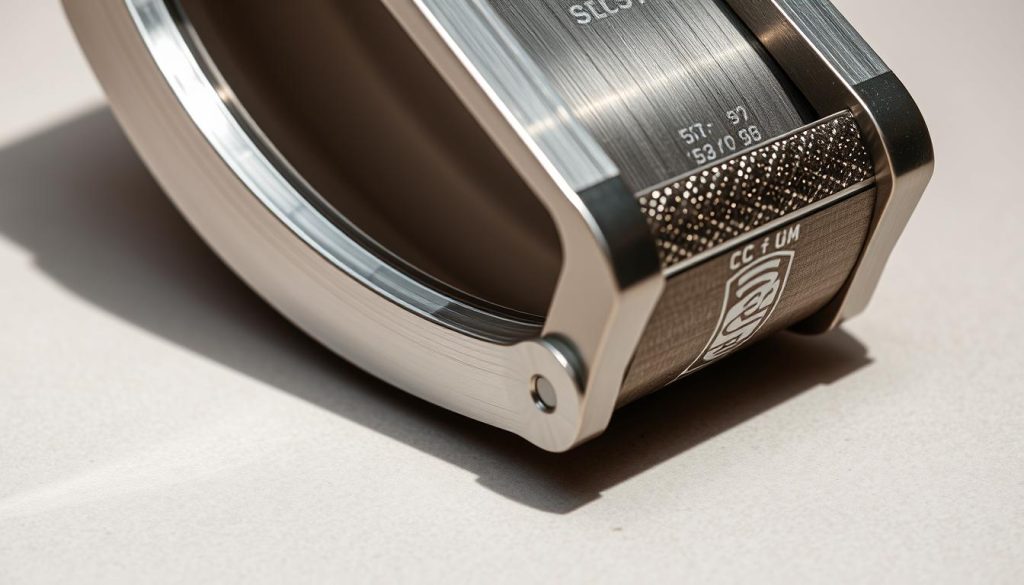
Durability and care by material
Painted steel: warm tones and an attractive price. It needs regular care: avoid prolonged exposure to moisture and wipe it down after use.
Stainless steel: a brighter sound and excellent resistance to moisture and impacts. It needs minimal maintenance, making it ideal for frequent outdoor use.
Premium alloys (nitrided steel, steel-titanium): high durability and better tuning stability, but a higher price. These options suit demanding musicians.
- Check the tuning quality and weld finish: they affect note stability and overall quality.
- Entry-level models may be attractively priced but require closer attention to their tuning.
- Recommended accessory: a padded case. Dry the instrument promptly after outdoor use.
Practical tip: choose a material that suits how you play, whether you play contemplatively indoors or travel regularly, to preserve the instrument’s sound and lifespan.
Reference pitch and group playing: 440 Hz, 432 Hz, and other options
The reference pitch determines how your instrument blends with others and how you perceive its sound during a session.
440 Hz for playing music in a group
440 Hz is the standard reference pitch in Western music. It helps prevent pitch differences during rehearsals and concerts.
Playing at 440 Hz makes it easier to match a piano, guitar, or voice. Mixing two reference pitches often creates unpleasant beats.
432 Hz for relaxation practices
432 Hz is chosen by some for its aesthetic qualities and the gentleness they perceive in its sound.
There is no scientific consensus proving that it has a greater effect on the body or mind. Models tuned to 432 Hz are less common and may cost more.
Listen to comparisons before buying: the subtle difference between 432 and 440 Hz is often audible, but which you prefer is subjective.
As a curiosity, a reference pitch of 429.6 Hz is sometimes mentioned, but it makes group playing even more difficult.
- Practical choice: group → 440 Hz; solo relaxation → 432 Hz.
- Avoid mixing different reference pitches during the same session.
- Multiscale models with magnets are expensive and do not change the basic reference pitch.
Final decision: base your choice on how you mainly play and who you play with. Trying the instrument remains the best way to hear how its notes sound and work together.
Budget, brand, and accessories: finding the right balance
Your budget often shapes the balance between finish, tuning, and brand. Before buying, set a price range to avoid regrets.
Prices by size and number of notes
As a guide, small entry-level models start at around €50. Compact models from lesser-known brands cost around €200 for about fifteen notes. Models from established brands can exceed €700 to €1,000.
More tongues and notes increase manufacturing complexity and price.
Brands, tuning quality, and warranty
Brands such as Zenko (Metal Sounds), Himalaya Blessings, Nataraj, Rammerdrum, and Rav Vast offer good finishes and stable tuning.
If you play often, the warranty and quality of the tuning may justify the extra cost.
Useful accessories that should not decide your purchase
- Mallets, finger protectors, stickers, an instruction booklet, and a bag.
- Put your money chiefly toward a sturdy case and suitable mallets.
- Accessory bundles should not drive your purchase: prioritize tuning and sound.
“A well-tuned model from a lesser-known brand can be an excellent first choice before investing in a premium brand.”
Conclusion
Before buying, rank your priorities: transport, resonance, and repertoire.
Define how you will use the instrument, then choose a suitable size and number of notes. For mobility, favor smaller models; for deeper bass and longer resonance, choose a larger one.
Aim for 11 to 12 notes or more to play familiar melodies, or 8 to 10 notes for improvisation and children’s learning. Choose 440 Hz for group playing and 432 Hz for relaxation sessions.
Choose the material according to your budget: painted steel produces a gentle sound, while stainless steel stands up better to outdoor use. Try several models, write down your priorities, and then make an informed purchase.