
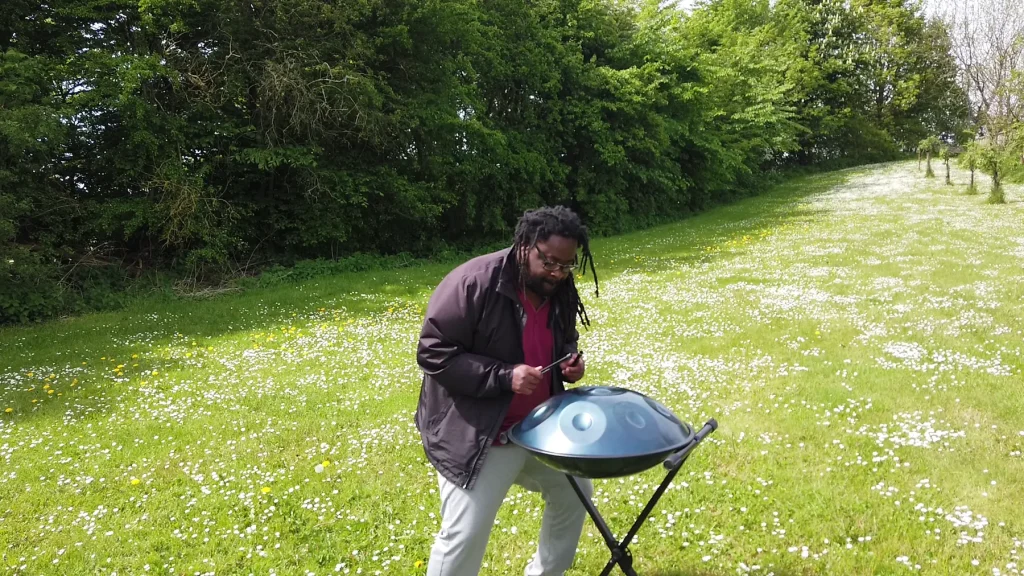
Goal: help you make an informed choice between two melodic steel percussion instruments, with an emphasis on experience, relaxation and well-being rather than stage performance.
Both instruments can be diatonic and encourage relaxation through steady sound textures. One offers clear, enveloping tones rich in harmonics; the other produces soft, deep low notes that can help you feel grounded.
Meditation calls for a suitable volume, sustain that follows the breath, and a range of notes that supports concentration. Tuning to 440 Hz makes it easier to play with a group, while 432 Hz is often chosen for solo well-being sessions.
Below, we explore their origins, construction, playing techniques, frequencies, size, durability and cost, then offer recommendations for different sessions. For a practical comparison, see our comparison guide.
Introducing two steel instruments for meditation
Developed in the late 20th and early 21st centuries, these steel instruments quickly found a place in well-being practices. The handpan emerged in the late 1990s, inspired by the Caribbean steel drum and the Indian ghatam. The tongue drum appeared in the mid-2000s, when Dennis Havlena made one from gas cylinders, drawing on traditional slit drums.
Although their round shapes look similar, the two instruments have different acoustic structures: dimples on one and tongues on the other. That difference shapes their sound, sustain and physical feel during meditation.
“Simple playing techniques let you start making music quickly; rich harmonics invite further exploration.”
- Uses: individual sessions, meditation circles, breathwork workshops, yoga and practice at home.
- Accessibility: the feel of steel, gentle vibrations and breathing in time with the melodies.
- Audience: simplicity appeals to beginners, while depth appeals to composers and improvisers.
| Aspect | Handpan | Tongue drum |
|---|---|---|
| Origin | Late 1990s | Mid-2000s |
| Structure | Dimples (domes) | Tongues (slits) |
| Strength | Improvisation and composition | Easy to learn |
This guide compares the two instruments without favouring either. It covers their origins, scales, volume, sustain, playing techniques, costs and care to help you choose for your practice and sound environment.
Origins and construction: similar instruments with different histories
These two instruments followed very different paths: one came from a Swiss workshop, the other from creative reuse.
Handpan: from PANArt’s Hang to precision craftsmanship
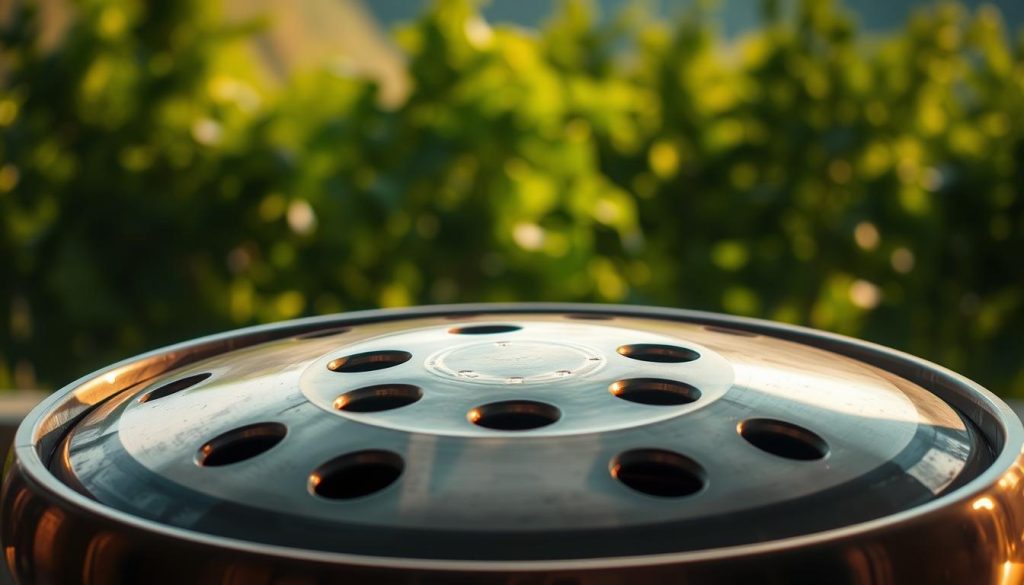
In 1999, Felix Rohner and Sabina Schärer of PANArt created the Hang, which laid the groundwork for the handpan. A handpan is made from two shells of nitrided or stainless steel, joined together and shaped with tuned areas called “dimples.”
Each note is shaped by hand. Tuning takes time and expertise. The thin steel, often 1 to 2 mm thick, and the shaping process help explain production times of two to three months.
Steel tongue drum: from repurposed cylinders to modern models
Dennis Havlena developed the tongue drum concept using recycled gas cylinders. Tongues cut into a thick steel surface vibrate freely.
Contemporary models now benefit from laser cutting and grinding, which make them more consistent. The steel is typically 3 to 6 mm thick, making the instrument sturdy and easier to produce.
- Construction: shaped dimples or cut tongues.
- Thickness: thin, delicate steel or thick, sturdy, stable steel.
- Practical effects: tuning stability, sensitivity to knocks and ease of care.
In practice: handcrafted handpans can offer highly customized hexatonic or heptatonic scales. Steel tongue drums are often more standardized.
“The complexity of production explains much of the price difference between these two instruments.”
Sound and feel in meditation: handpan clarity and steel tongue drum depth
Listening reveals two complementary approaches to sound. One has a clear timbre, rich harmonics and expressive melodies. The other emphasizes low, mellow fundamental notes and very long sustain. These differences directly affect your sense of immersion and your musical experience during a well-being session.
Timbre, harmonics and resonance
The first instrument stands out for its distinct harmonics. Its notes respond readily and expressively, making it useful for guiding breathing.
The second creates a deep bed of sound. Its tones surround the body and support a sense of grounding during relaxation.
Sustain and volume
The first has moderate sustain (15 to 25 seconds): it remains controllable and leaves space between strikes.
The second offers longer sustain (30 seconds or more), useful for resonant pauses and slow transitions.
Scales, notes and sound fields
- Expressiveness: the first may have 7 to 10 notes and several sound fields, offering subtle variations in solo playing.
- Simplicity: the second often has 6 to 9 pentatonic or heptatonic notes, making repetitive patterns and concentration easier.
“Clarity for visualization, depth for grounding: choose the effect you want.”
For example, use sustained low notes for a body scan, or more articulated phrases for visualization and melodic movement. This section helps you choose an instrument for your relaxation goal.
Playing techniques and accessibility: meditation practice for beginners and musicians
How you strike the instrument and how comfortably you can play it directly affect a relaxation session.
Playing with hands or mallets: nuance, precision and comfort
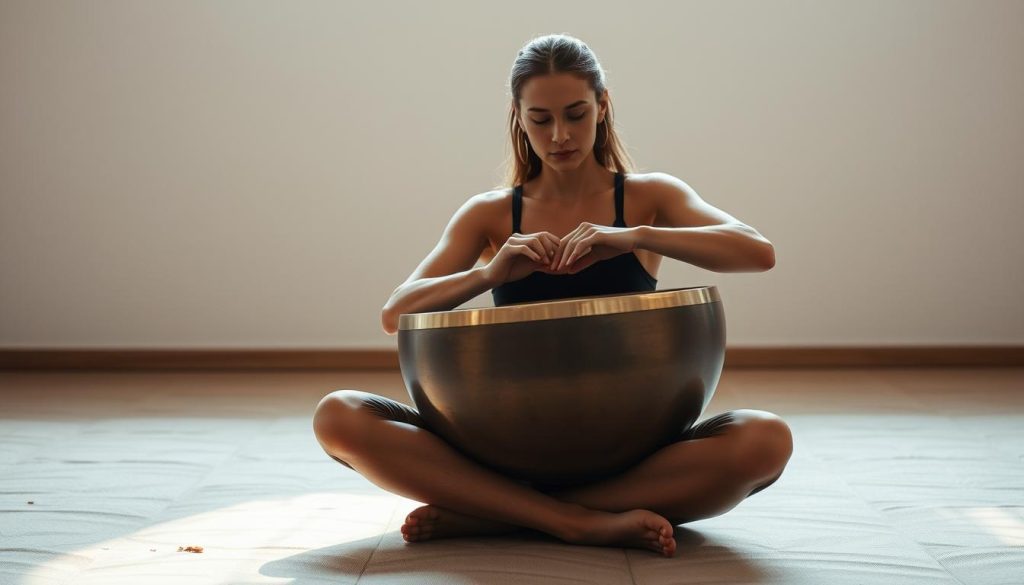
Playing with your hands: this allows fine nuances and control over harmonics. It takes time to master dynamics and avoid disturbing sensitive notes.
Playing with mallets: this supports comfortable, repetitive playing. Felt mallets produce softer sounds and a more even attack.
Learning curve and intuitive playing for relaxation
Numbered tongues make improvisation easier and help beginners settle into hypnotic patterns. New players often find slow ostinatos rewarding almost immediately.
The other instrument takes several months of practice to realize its full expressive potential. Musicians can work on precision and dynamic range.
- Ergonomics: body position and supports that help prevent fatigue.
- Practice: slow ostinatos for paced breathing; evolving patterns to accompany spoken guidance.
- Workshops: either instrument works well in group sessions, depending on participants’ experience.
“Ease of entry and expressive depth can go together; choose the instrument that suits your pace of learning.”
For practical resources and introductory exercises, see a dedicated guide such as our tongue drum page.
Frequencies and well-being: 432 Hz for relaxation, 440 Hz for playing together
The chosen tuning frequency can shape a session’s atmosphere, from how vibrations feel in the body to how well the instrument blends with other musicians.
Tuning to 432 Hz: its perceived effect on relaxation and vibration
432 Hz is often recommended for well-being. Many people report a sense of warmth and gentler vibrations in the body.
For solo playing, this tuning can accompany slow breathing and create an intimate atmosphere. It suits sessions focused on relaxation and sensory awareness.
440 Hz: compatibility with ensembles and group performances
440 Hz remains the modern reference for playing in groups. It makes it easier to blend with guitar, flute, voice and other percussion instruments.
For performances and group workshops, choosing 440 Hz avoids tuning clashes and simplifies rehearsals.
Try both tunings: your experience matters more than theory, and sensitivity to vibrations can vary from one session to the next.
- Several models are available in both 432 Hz and 440 Hz, which is useful if you alternate between solo practice and group sessions.
- Check that your instruments are tuned compatibly if you also use tuned bowls and chimes.
Size, weight and portability: choose for your sessions and spaces
Portability affects how regularly you practice your sound rituals. An instrument that is easy to move encourages daily use in different settings.
Transport, stands and cases: everyday convenience
Typical size and weight: a handpan measures about 50 cm across and weighs 4 to 6 kg. A tongue drum is usually 30 to 40 cm across, with miniature models around 15 cm; it weighs 1 to 3 kg, depending on its thickness (3 to 6 mm).
The more compact model is easier to carry in a soft case. The larger one often needs a hard case to protect its tuning and the metal itself.
Adjustable stands, cushions and vibration-dampening mats keep the instrument steady. They reduce unwanted noise and improve posture during long sessions.
Choose a case that suits how you travel—on foot, by bicycle, by public transport or by car—to protect the tuning and make carrying easier.
| Criterion | Handpan | Tongue drum |
|---|---|---|
| Diameter | About 50 cm | 30 to 40 cm (15 cm for a miniature model) |
| Weight | 4 to 6 kg | 1 to 3 kg |
| Recommended protection | Hard or reinforced case | Simple case or padded bag |
| Durability | More sensitive to knocks | Thicker, sturdier steel |
In short, consider where you practice and how you travel. These determine how you will use the instrument and which accessories will help you practice with peace of mind.
Durability and care: the handpan’s sensitivity and the tongue drum’s sturdiness
An instrument’s lifespan depends as much on daily care as on its steel. The type and thickness of the metal determine how it withstands knocks, heat and moisture.

Handpan: heat, knocks and expert retuning
A handpan is made from thin steel. This gives it a rich timbre but makes its tuning sensitive.
Avoid drops, prolonged sun exposure and damp places. A knock can put several notes out of tune.
To care for it, wipe it down after each session, oil it regularly and store it in a case away from temperature swings.
Allow for the cost of retuning by a specialist if you play frequently or perform in public.
Tongue drum: thick steel, simple adjustments and minimal care
A tongue drum has a thicker structure. It withstands travel and knocks better.
Minor adjustments can sometimes be made without a specialist, using a magnet or careful grinding. Routine care mainly means preventing rust and wiping it down occasionally.
- Effect on practice: stable tuning supports the player’s confidence and the quality of well-being sessions.
- Lower costs: the thick steel model needs fewer adjustments and is easier to take from place to place.
Budget, prices and hidden costs: spending the right amount
Considering the total cost helps you choose an instrument suited to your practice and goals.
Indicative price ranges can guide your purchase: a handpan generally costs €999 to €2,999, while a tongue drum costs €22.90 to €499. These differences reflect production methods, lead times and customization.
Beyond the purchase price, budget for extras: €50 to €200 for a case, €20 to €80 for accessories such as mallets and stands, and a small recurring amount for care products and cloths.
Retuning a handpan may cost €100 to €300 per year, depending on use. A tongue drum needs less attention, leading to a noticeable reduction in running costs.
Try several models in a quiet room. Check their tuning, projection and sustain before buying.
| Expense | Range (€) | Frequency | Effect |
|---|---|---|---|
| Initial purchase | 22.90 to 2,999 | One-time | Determines sound quality |
| Case or bag | 50 to 200 | One-time | Protection and transport |
| Accessories | 20 to 80 | One-time or occasional purchase | Playing comfort |
| Retuning and care | 0 to 300 per year | Annual | Tuning stability |
If your plans extend beyond personal practice to workshops or performances, allow for travel, insurance and backup instruments. Musicians who perform in public should include these costs in their choice.
Handpan or tongue drum: which is better for meditation? Recommendations for your goals
Your goals can guide your choice between deep fundamental tones and harmonic richness.
If simple relaxation and grounding are your priorities, favour the model with deep fundamental notes. It offers long sustain, enveloping vibrations and an easy start, making it well suited to extended sessions in quiet spaces.
If you want a more nuanced musical experience, choose the instrument with rich harmonics and stronger projection. Its range of 7 to 10 notes supports improvisation and more elaborate guided sessions.
For tuning, choose 432 Hz if well-being and relaxation are your priorities. Choose 440 Hz if you want to play easily with other musicians in a workshop or concert.
Combine your chosen instrument with singing bowls to enrich the harmonic space and vary how listeners focus their attention.
- Small spaces and solo practice suit deep fundamental notes.
- Groups and large rooms benefit from projection and harmonic richness.
- Listen to several scales and notes before buying: how their resonance feels to you can guide your choice.
| Goal | Main strength | Recommendation |
|---|---|---|
| Simple relaxation | Deep fundamental notes, long sustain | Sturdy model that withstands knocks |
| Guided sessions and improvisation | Rich harmonics, projection | Expressive instrument with 7 to 10 notes |
| Group sessions | Compatibility with other instruments | 440 Hz tuning recommended |
Conclusion
The best decision starts with listening. Feel the vibrations in your body and let that experience guide your choice between the two instruments. Differences in tone, sustain and scale affect how each works for a given space and purpose.
In summary, the handpan is an expressive handcrafted instrument, rich in harmonics and ideal for musicians and elaborate sessions. The steel tongue drum emphasizes simplicity, durability and long sustain, making it suitable for beginners and regular practice.
Consider price, portability, care and tuning (432 Hz or 440 Hz). Starting with a tongue drum may be a sensible choice; you can broaden your musical experience later if you wish. These percussion instruments make a welcome addition to a well-being practice.