
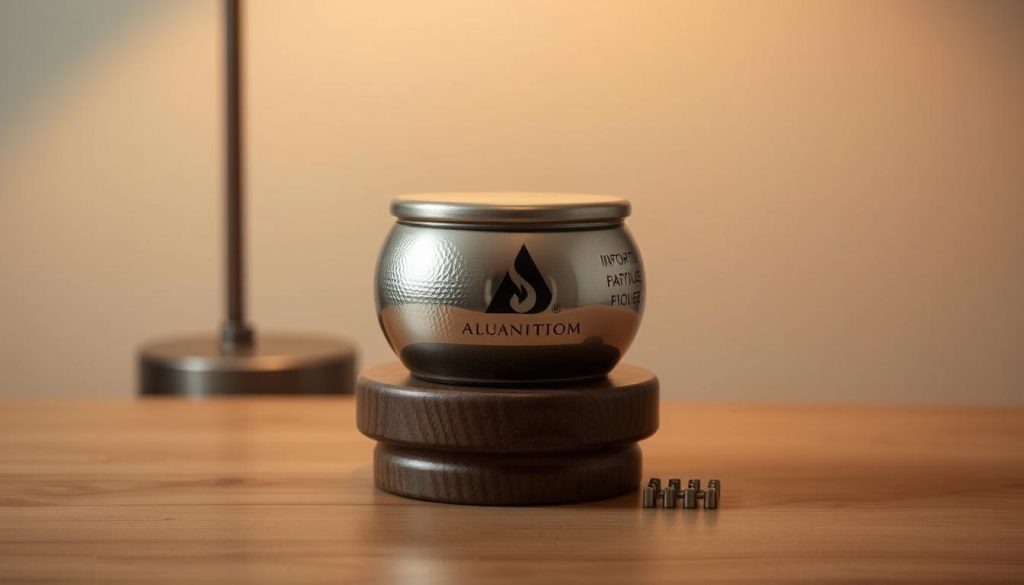
Quick introduction: The steel tongue drum, popularized by Dennis Havlena in 2007, is a melodic idiophone that has become popular for relaxation and creativity. This tongue drum stands out for its compact size and simplicity, making it ideal for playing on the go.
These small melodic percussion instruments appeal to players because they are easy to carry, affordable and immediately playable. They suit meditation, music therapy and learning.
Purpose of this guide: to help you choose among the best compact models based on their available notes, scale, materials and price. We assess sustain, the number of notes and resonance quality.
Keep the limitations in mind: shorter resonance, lower volume and, on very small instruments, a sometimes metallic tone. In 2025, the range available in France is wider; this guide offers tests, brands, advice on trying instruments and practical pointers for buying well.
Why a buying guide for mini and pocket tongue drums?
Compact models gained ground in the French market in 2025, driven by demand for relaxation, education and portability. The tongue drum is widely used for sound yoga, music therapy and introductory lessons.
These instruments appeal because they are accessible and easy to use. They interest a wide range of people: traveling musicians, teachers, therapists and beginners.
Why a dedicated guide? Small instruments bring acoustic constraints and specific portability requirements. Their quality criteria differ from those for larger instruments: number of notes, sustain, tone and ergonomics.
“Asking for unedited demonstration videos and a clear return policy has become essential to making a good purchase.”
In France, you can buy in a store, where you can try the instrument, or online after checking the return terms. Note the roughly 15% price increase in the midrange segment in recent years, a sign of improvements in materials and tuning.
| Use | Audience | What to look for |
|---|---|---|
| Meditation / yoga | Practitioners, beginners | Pentatonic scales, light weight |
| Teaching | Teachers, children | Durability, number of notes |
| Travel / creativity | Traveling musicians | Portability, adequate sustain |
| Outdoor concerts | Bands, arrangers | Choose a larger diameter |
Mini and pocket tongue drums: advantages and limitations
For people who travel often, small size becomes a deciding factor. These models are easy to carry and set up, while offering an approachable sound for everyday playing.
Key advantages of small diameters for playing on the go
The advantages are practical: a minimal footprint (12 to 30 cm), a weight suitable for children and instant setup.
Strengths:
- Easy to carry in a backpack.
- Quiet playing in shared spaces.
- Resistance to knocks when the instrument is protected.
- Some models are surprisingly loud for their size.
Unavoidable trade-offs in resonance, volume and versatility
Below 15 cm, expect less sustain and a more metallic tone.
Perceived volume decreases, bass notes are limited and harmonic richness is reduced.
What these models do better—and worse—than standard sizes
Standard sizes offer greater depth and harmonic versatility. They are heavier and take up more space.
Practical recommendation: a diameter of around 30 cm, with 3 mm steel, offers a good balance of portability and quality.
| Criterion | Small (≤ 15 cm) | Medium (around 30 cm) | Standard (> 35 cm) |
|---|---|---|---|
| Portability | Excellent | Very good | Moderate |
| Sustain | Low | Good | Excellent |
| Bass notes | Limited | Present | Deep |
| Versatility | Basic | Good | Harmonically rich |
Build quality (thickness and treatment) greatly affects the sound of small models. Double tongues, such as those offered by Moozica, enrich the tone and improve the perception of sustain.
“Always listen to unedited demonstrations through headphones to check the tone before buying.”
In short, a compact instrument gives you real freedom to play every day, provided you accept its acoustic limitations and make an informed choice based on how you will use it.
Mini, pocket and micro: defining the sizes and their characteristics
The size of a compact instrument determines its tone, sustain and playing comfort. Before buying, identify your main use: walking, relaxation or learning.
Diameter, weight, and number of tongues and notes
These instruments are commonly classified by diameter: micro ≤ 6 inches, pocket around 6 to 10 inches, and mini around 10 to 12 inches. These dimensions directly affect the number of tongues and therefore the number of notes.
Useful reference points: 4.5 inches (around 11 cm), 6 inches (around 15 cm), 10 inches (around 25 cm) and 12 inches (around 30 cm). Instruments measuring 4.5 to 6 inches are often used for casual playing or as a spare.
How common sizes affect the sound
4.5 to 6 inches: a more metallic tone and short sustain. A typical weight of around 0.7 kg makes them easy to carry but unstable on your lap.
10 to 12 inches: a better balance. More air inside produces clearer bass notes and greater sustain. A 12-inch model often weighs 1.8 to 2.5 kg, improving its stability.
“On very small models, check how the tongues are cut to avoid buzzing.”
- Tongue layout: this affects comfort depending on whether you play with your fingers or mallets.
- Material and thickness: sufficient density partly offsets a small diameter.
- Number of notes: from 6 to 15, depending on size and configuration.
| Size | Diameter | Number of notes | Typical weight |
|---|---|---|---|
| Micro | 4.5 inches (around 11 cm) | 6 to 8 | Around 0.7 kg |
| 6 to 10 inches (around 15 to 25 cm) | 6 to 12 | 0.8 to 1.6 kg | |
| Mini | 12 inches (around 30 cm) | 8 to 15 | 1.8 to 2.5 kg |
A simple rule: choose micro for an introduction or a collection, pocket for everyday mobility, and mini for a more serious start.
Number of notes and scales: what changes on small models
On a small instrument, the range of notes shapes how easy it is to learn and what sound textures you can create. The number of notes influences how you can use it from the first few minutes.
8 to 12 notes for beginners, 15 or more for further exploration
8 to 12 notes are enough for learning, improvising and relaxation. These configurations prioritize simplicity and help avoid wrong notes.
15 notes or more suit experienced players looking for chromatic notes or several scales. On small diameters, watch the density of the tongues: sustain may suffer.
Pentatonic, major, minor and Akebono scales: uses and limitations
The pentatonic scale is ideal for wellness: it avoids dissonance and makes playing intuitive.
C major and D minor remain reliable teaching choices for following tutorials and improving.
Akebono creates distinctive meditative moods but is less versatile for traditional harmony.
Chromatic notes and multiple scales: do they work on a small instrument?
A chromatic layout offers more notes but can be harder to navigate on a small diameter. Interference between tongues increases.
Multiple scales, as on the magnetically tuned Beat Root, add flexibility. Idiopan offers advanced adjustments to fine-tune the instrument.
| Use | Number of notes | Advantage |
|---|---|---|
| Beginners / wellness | 8 to 12 | Intuitive playing, no wrong notes |
| Structured learning | 10 to 15 | C major or minor for tutorials |
| Advanced exploration | 15 or more | Chromatic notes or multiple scales (diameter > 30 cm recommended) |
“Listen to demonstrations before choosing an unusual scale so you do not end up with an unintended musical limitation.”
Materials and construction: steel, aluminum and wood in small instruments
Your choice of material directly affects the sound and lifespan of a small instrument.
Stainless steel or aluminum
Steel: a warmer sound, deep sustain and better resistance to knocks and moisture. Steel that is 3 mm thick provides notable tuning stability.
Aluminum: lighter (around +30%), with a bright, high tone. Ideal for portability, it needs a reinforced case and careful handling.
Wooden instruments
Wooden models offer a softer, more natural tone. Their box-shaped body has a warm appearance suited to calming spaces.
Thickness, treatment and corrosion protection
Thicker sheet metal helps offset the small body and improves sustain. Corrosion-resistant treatments and finishes limit scratches and preserve the instrument’s quality.
- Tongue cutting and calibration: essential for avoiding buzzing.
- Premium alloys: some makers seek a balance between weight and sustain.
- Listening to demonstrations of steel, aluminum and wood remains the best approach.
| Material | Advantage | Limitation |
|---|---|---|
| Stainless steel | Warmth, sustain, durability | Heavier |
| Aluminum | Light weight, clarity | Vulnerable to knocks |
| Wood | Soft tone, appearance | Less projection |
Sound quality in a mini: assessing sustain, clarity and balance
The sound quality of a small instrument is judged first by how long its notes last and whether it buzzes. These criteria let you base your choice on more than a first impression.

Sustain benchmarks
Practical benchmark: aim for at least 8 seconds of sustain on bass notes for a convincing sound from a small instrument.
| Model | Measured sustain |
|---|---|
| Moozica | Around 9.2 seconds |
| Entry-level model (for example, Thomann) | Around 7.8 seconds |
How to test it in a store and at home
- Strike each note or tongue and listen to how the sound fades.
- Check the volume balance between low and high notes.
- Listen for interference between neighboring tongues.
- Record the sound with a smartphone to analyze its amplitude curve.
- Compare playing with fingers and mallets, with and without gloves.
Interference, distortion and practical advice
A low level of distortion is desirable.
To test at home, choose a quiet room, a stable surface and a tuning app. Repeat your tests at different times to judge the consistency of the sounds and the balance between notes.
“Quality becomes clear over time: sustain, an even decay and consistent notes.”
Size, weight and ergonomics: everyday playing comfort and transport
Playing comfort depends as much on an instrument’s size as on its weight distribution.
Ergonomics and posture
Size and weight determine stability on your lap or a stand. A 4.5-inch (around 11 cm) model weighing about 0.7 kg is light but not very stable.
A 12-inch (around 30 cm) instrument weighing 1.8 to 2.5 kg offers a good balance for everyday playing. It combines easy-to-read notes with reasonable portability.
Comfort for children and preventing fatigue
For young musicians, choose a smooth edge and a flat surface. Lower weight reduces wrist strain.
Switch between positions (lap, table and stand) and take short breaks. A relaxed striking technique reduces the risk of fatigue.
“Trying the instrument in real situations—on a journey, during a session or while climbing stairs—helps you judge it better than a photograph can.”
| Size | Diameter | Weight |
|---|---|---|
| Decorative | 4.5 inches (around 11 cm) | Around 0.7 kg |
| Recommended all-rounder | 12 inches (around 30 cm) | 1.8 to 2.5 kg |
| Outdoor projection | 16 inches (around 40 cm) | 3 to 4 kg |
Tip: choose a padded case with shoulder straps to protect the instrument without adding too much weight. Try several positions to improve playing comfort.
Essential accessories for a compact instrument
A good set of accessories turns a small instrument into a dependable choice for everyday playing.
Mallets and sound
Felt mallets: a gentle attack, ideal for relaxation sessions.
Silicone: a clearer, longer-lasting sound and a good balance for stage use.
Rubber: a precise attack, useful for rhythmic playing and teaching.
Choose lightweight mallets with rounded tips to protect the instrument and reduce fatigue.
Stands, cases and storage
An adjustable stand stabilizes the instrument, improves projection and frees your hands.
Molded cases (€50 to €80) protect against knocks (tested from 1 m) and temperature changes. Choose one with an integrated pocket for mallets and a tuner.
- Essential accessory kits are available from several retailers and make buying easier.
- You can make your own stand, but check its safety and stability.
- Care kit: a dry cloth, gentle spray and desiccant packets, depending on the material.
“Good accessories extend the instrument’s life and help keep its sound consistent in everyday use.”
Practical tip: buy the case, stand and mallets along with the instrument so you can check how they work together and try several mallet models on site.
Budget and price: where mini and pocket models stand today
Your budget often marks the boundary between immediate enjoyment and higher sound expectations. In 2025, price ranges help you choose according to your intended use and the lifespan you want.
Entry-level, midrange and premium: what each price tier offers
Entry-level (€150 to €300): ideal for an introduction, with 8 to 10 notes; enough for relaxation and learning.
Midrange (€400 to €600): better value for money, a more stable tone and greater durability. Prices in this segment rose by around 15% in 2024.
Premium (€700 to €1,200): professional tuning, 15 notes or more and a high-end finish for demanding uses.
Hidden costs
Budget for accessories: a reinforced case (€40 to €80 extra), mallets (€8 to €25) and stands (€30 to €60). These purchases add to the instrument’s price and help protect its value.
Used or new, counterfeits and warning signs
Be wary of prices that are too low.
“Always compare three models in the same range to assess their musicality.”
| Tier | Price range | Benefit |
|---|---|---|
| Entry-level | €150 to €300 | Easy access |
| Midrange | €400 to €600 | Best value for money |
| Premium | €700 to €1,200 | Professional quality |
Brands and models to know for small instruments
When choosing a compact instrument, it helps to know which makers stand out for quality and innovation.

Beginner picks
13-note Kudout (C major): simple, with many positive reviews for learning.
Beat Root: magnets provide several scales, making it ideal for trying different scales without changing instruments.
Zenko / Metalsounds: made in France, with a careful finish and a consistent musical sound.
Premium models and innovations
RAV Vast offers sustain close to that of a handpan for players who enjoy long-lasting harmonics.
Idiopan offers professional, adjustable tuning, useful on stage and in the studio.
Moozica stands out for its double tongues (around 17 notes), which enrich its tone.
Other makers and practical advice
Hapi, Meinl, Rammerdrum and Pearl cover several price ranges; reviews vary by model.
- Check the warranty (2 to 5 years) and included accessories.
- Listen to unedited demonstrations on YouTube to judge the real sound.
- Choose authorized retailers to avoid counterfeits.
| Category | Examples | Advantage |
|---|---|---|
| Beginner | Kudout, Zenko | Easy to play |
| Exploration | Beat Root, Moozica | Versatile tuning |
| Premium | RAV Vast, Idiopan | Sustain and harmonics |
“Select two or three models for each budget, compare demonstrations and try them before buying.”
Uses: relaxation, meditation, music therapy and learning
These instruments naturally accompany meditation, relaxation and music therapy sessions, while also being useful for musical learning. Their simplicity makes them an accessible tool for beginners and professionals alike.
Why pentatonic scales feel reassuring in wellness practice
The pentatonic scale avoids dissonance. It lets you improvise without worrying about wrong notes.
In relaxation and meditation, this frees the mind: the practitioner can focus on breathing and resonance.
Learning music: when to choose a diatonic scale
For structured study, a diatonic scale (major or minor) is preferable. It helps teach theory, melodic patterns and basic sight-reading.
Alternate free pentatonic sessions with diatonic exercises to improve while keeping playing enjoyable.
- Yoga and meditation: slow strikes, guided breathing and listening to resonance.
- In music therapy: the instrument becomes an inclusive means of expression that helps regulate emotions.
- For learning: tutorials in C major or D minor help you progress.
- Simple routine: 10 minutes of breathing with sustained notes.
- Then 10 minutes of exercises using diatonic patterns.
- Record your sessions to track your progress and adjust your choice of scale.
“Alternating free playing with guided exercises maximizes relaxation while supporting learning.”
Where to buy in France: a specialist store, a large retailer or online
Where you buy affects your ability to try the instrument, the warranty and delivery security. Specialist stores let you try the instrument and get personal advice. Large retailers offer inexpensive entry-level models. Buying online gives you the widest selection but calls for care.

Trying instruments, unedited videos, returns and warranties: good habits
Before buying, ask for unedited videos of the exact model. Check the return policy (for example, 30 days) and warranty (generally 2 to 3 years).
Authorized retailers, serial numbers and online security
Choose well-known retailers in France such as Woodbrass or Thomann. Ask for the serial number and, if possible, contact the manufacturer to verify it.
- Avoid unusually low prices during major sales.
- Ask for a recording of the exact instrument being sold.
- For premium models, choose secure delivery and shipping insurance.
- Keep proof of purchase and warranty documents.
| Channel | Benefit | Advice |
|---|---|---|
| Specialist store | Hands-on trial, technical help | Test it using the listening method |
| Large retailer | Entry-level prices | Suitable for a first purchase |
| Online | Variety | Request unedited demonstrations and a return policy |
“Trying the instrument and documenting your purchase protect your investment.”
Pre-purchase checklist: intended use, scale, number of notes, audio test, warranty, accessories and return policy.
Caring for and storing a mini or pocket model
Regular care preserves musicality: a few simple habits are enough to maintain tuning and limit corrosion.
Cleaning and preventing corrosion
After every session, wipe the surface with a dry cloth to remove sweat and dust. For steel, this simple step prevents stains and extends its life.
Aluminum models benefit from a thin layer of protective wax once a month. This reduces oxidation and preserves their appearance.
Always store the instrument in a case and add a desiccant packet to limit moisture. Prevention is better than restoration.
Temperature, humidity and tuning stability
Avoid temperature swings: do not leave the instrument in a hot car trunk or a damp room. Thermal shocks affect tuning.
Check the screws and magnets if the model is adjustable. A monthly inspection and annual service reduce unpleasant surprises.
Simple routine: wipe after each use, inspect monthly and arrange annual workshop maintenance if needed. A well-maintained steel instrument can last 10 years or more.
“Maintenance is a tool for preservation: it maintains musicality, protects value and makes resale easier.”
Practical advice: keep a record of maintenance (date and product used) so you have a history when buying or selling a used instrument.
Health, ergonomics and common myths
Playing a small instrument calls for a few simple habits to protect your body and the instrument.

Tendinitis risk, breaks and technique
Relaxed wrists, controlled movements and steady breathing reduce tension.
Warm up your fingers and wrists before a session with a few circular movements. Alternate between playing with your fingers and with mallets to vary the strain.
Take breaks every 15 to 20 minutes during long sessions, especially if you use firm mallets.
Indestructible? No: side impacts and sun exposure
It is risky to think the instrument is indestructible. Side impacts and direct sunlight can distort notes and alter tuning, as they can with other percussion instruments.
Use a stable stand so you do not have to press the instrument against your body, and choose suitable mallets to soften the impact.
“Prevention is better than repair: small, regular steps provide years of enjoyment.”
| Problem | Simple action | Expected effect |
|---|---|---|
| Wrist strain | Relaxed wrists, breaks | Less fatigue |
| Overheating / sun | Store in the shade | Stable tuning |
| Side impacts | Reinforced case, stand | Protects the tongues |
Alternatives and complements: handpans, larger diameters and tunable models
When sound becomes the priority, consider a larger or adjustable instrument. A larger diameter brings more bass, a wider range and noticeable sustain.
When to move to a larger diameter
Choose a diameter of 14 to 16 inches if you want clearer bass notes and longer-lasting notes. The difference is most noticeable when sustain exceeds 8 seconds, which is useful on stage and for meditation.
Handpan and compact steel idiophone
A handpan offers much longer sustain but generally costs more than €1,000 and needs specific care. Small models remain more affordable, lighter and easier to use.
Magnetic tuning, multiple scales and pitch standards
Magnetic tuning (Beat Root, Idiopan) lets you change scales without buying several instruments. It is a flexible way to explore modes and keys.
The 432, 440 and 444 Hz pitch standards affect perception. 432 Hz is often associated with wellness, 440 Hz is standard, and 444 Hz brings a slight sense of harmonic openness. Listen through headphones with your repertoire and audience in mind.
“RAV Vast combines rich harmonics with sustain close to a handpan’s; it is ideal if you want long-lasting textures.”
| Option | Advantage | Limitation |
|---|---|---|
| Large diameter (14 to 16 inches) | Bass, sustain | Heavier to carry |
| Handpan | Very long sustain, harmonics | High price (> €1,000) |
| Magnetically tunable | Several scales, versatility | Complex maintenance |
Practical tip: keep two instruments: a compact one for portability and a larger one or a handpan for long sessions. Start with a compact instrument, work out what you need, then invest in an adjustable or larger model.
Conclusion
Ultimately, a well-chosen small instrument becomes a regular, inspiring companion for your practice.
Define how you will use it (wellness, learning or creativity), choose a suitable scale and match the number of notes to the diameter. Aim for about 8 seconds of sustain on bass notes for a convincing sound.
Choose steel for warmth and durability, aluminum for light weight, or wood for a soft sound indoors. Get suitable mallets, a case and a stand.
Buy from a specialist store when possible, or from an authorized online retailer offering unedited demonstrations and clear return terms. Try instruments, compare them and let your ears decide. Start simply and progress at your own pace: these sizes are useful every day.