

These two styles share common roots. Their history reaches back to the blues and psychedelic rock, then to the powerful amplifiers of the 1960s. That shared ancestry explains why listeners unfamiliar with the styles still confuse them.
Over time, however, each developed a more distinct sound. Hard rock retains a strong blues influence, driven by straightforward riffs, expressive melodies and energetic rhythms. AC/DC, Led Zeppelin and Deep Purple are good examples.
Black Sabbath opened another path: a darker mood, heavily distorted guitars, more aggressive vocals and pronounced dissonance. After 1980, this branch divided into numerous subgenres. Today, three broad families help explain the evolution: the original blues-based lineage, traditional heavy metal and modern metal.
This guide offers simple pointers for classroom use or listening. The aim is to recognize each style through tempo, guitar sound, vocals and mood. To learn more, explore some pointers for telling these two styles apart.
What is the difference between hard rock and heavy metal?
To understand these styles, start with their origins. They emerged first in Britain and then in America, drawing on the blues, amplified guitars and the energy of live performance. This chapter of rock history began before the styles clearly separated.
Shared blues roots
In 1964, the Kinks released “You Really Got Me,” an early example of an abrasive riff. In 1968, the Beatles made a powerful impact with “Helter Skelter.” Jimi Hendrix, the Rolling Stones and other musicians pushed the sound further.
By the late 1960s, Led Zeppelin, Deep Purple and Black Sabbath had become major British bands. Led Zeppelin retained a strong blues flavour, while Black Sabbath brought a darker tension. The Stooges and the Doors, with their garage and psychedelic rock influences, also pointed toward a more radical approach.
Two distinct musical families
Gradually, each style established its own priorities. Hard rock favours groove, melody and a direct attitude. Heavy metal emphasizes dissonance, power and vocal intensity. Punk later accelerated some of these ideas. For more detail, see these pointers for distinguishing the styles.
- Sound: warm distortion or a more massive texture.
- Rhythm: a loose swing or a heavy beat.
- Mood: an electric party atmosphere or a sense of unease.
| Point of comparison | First family | Second family |
|---|---|---|
| Origins | Blues, direct guitar playing | Garage rock, psychedelic influences |
| Example | Led Zeppelin | Black Sabbath |
| Development | Groove, melody | Dissonance, intensity |
The origins and history of hard rock
In the late 1960s, three British bands changed rock history: Led Zeppelin, Deep Purple and Black Sabbath. Their music brought powerful guitars, expansive rhythms and prominent keyboards to the fore.

Led Zeppelin, Deep Purple and the British pioneers
Formed in 1968, Led Zeppelin brought together Jimmy Page, Robert Plant, John Paul Jones and John Bonham. After his time with the Yardbirds, Jimmy Page developed a rich sound heard in several major songs. Deep Purple also formed in 1968, around Jon Lord and Ritchie Blackmore.
The role of great guitarists
Ritchie Blackmore combines virtuosity, tension and long instrumental passages. In 1980, John Bonham’s death led Led Zeppelin to disband. Their breakup marked the beginning of a new chapter for many rock bands.
A lasting influence
AC/DC cemented its worldwide success with the 1990 album The Razors Edge. Queen inspired numerous artists. Formed in 1985 around Axl Rose, Guns N’ Roses won a large audience. Slash continued that influence with an album released in 2022. Deep Purple was still releasing albums in 2020.
These milestones show how each band influenced the live scene, the music and generations of musicians.
| Band | Historical milestone | Musical contribution |
|---|---|---|
| Led Zeppelin | Formed in 1968 | Riffs, blues, power |
| Deep Purple | Formed in 1968 | Keyboards, guitar, solos |
| Guns N’ Roses | Formed in 1985 | Energy, attitude, success |
Hard rock: an energetic style shaped by the blues
Its identity rests on direct energy rooted in the blues. A 4/4 beat often emphasizes the second and fourth beats. That swing encourages movement, sometimes even headbanging.
Riffs, rhythms and distorted guitar sounds
Riffs use power chords, minor pentatonic scales and shuffle rhythms. This approach extends the blues-rock tradition, away from the more drifting sound of psychedelic rock. Jimi Hendrix further illustrates the connection through his long improvisations.
A steady rhythm guitar often supports an expressive lead guitar. Jimmy Page and Ritchie Blackmore show how a guitarist can turn every solo into a highlight.
Themes, signature songs and rock culture
AC/DC provides a clear example: its heavy pulse makes listeners want to move. Led Zeppelin, Deep Purple and the Australian band also show the importance of arrangements in each song.
The songs address broken relationships, loneliness, substances, women and sexuality. This music belongs to an intense live culture shaped by major bands of the 1970s.
| Element | Characteristic | Example |
|---|---|---|
| Rhythm | 4/4, strong accents | AC/DC |
| Guitar | Power chords, solos | Jimmy Page |
| Themes | Love, loneliness, excess | Live favourites |
Heavy metal: darker and more radical music
A weighty atmosphere quickly became a hallmark of this style. Its riffs draw listeners into a dark tension that goes beyond electric blues. This development took shape in the early 1970s.

Black Sabbath and the birth of traditional metal
Black Sabbath transformed heavy rock into traditional metal. In 1970, the band released an album widely regarded as foundational. Its songs combine slow chords, an unsettling atmosphere and low vocals. The tritone, called Diabolus In Musica, heightens that tension.
Heavy guitars, fast rhythms and aggressive vocals
This style uses palm muting, staccato playing, syncopation, eighth notes and sixteenth notes. At times, a double bass drum pedal drives the beat faster. Phrygian, Aeolian and Locrian modes add a dark colour. Vocals range from high screams to deep tones.
Judas Priest, Iron Maiden and a new wave
Judas Priest made its sound more aggressive after beginnings close to hard rock. Then Iron Maiden, Saxon and Def Leppard helped launch the New Wave of British Heavy Metal in the early 1980s. Their songs evoke Tolkien, Vikings, the Middle Ages, occultism and Satan. To learn more, read this history of heavy metal.
| Element | Characteristic | Associated artist |
|---|---|---|
| Origins | Foundational album in 1970 | Black Sabbath |
| Sound | Heavy riffs, tritone | Judas Priest |
| New wave | Early 1980s | Iron Maiden |
Hard rock, heavy metal and modern metal: how to recognize them by ear
Careful listening soon reveals the features of each style. Four clues are enough: groove, guitar distortion, instrumental technique and vocal style.
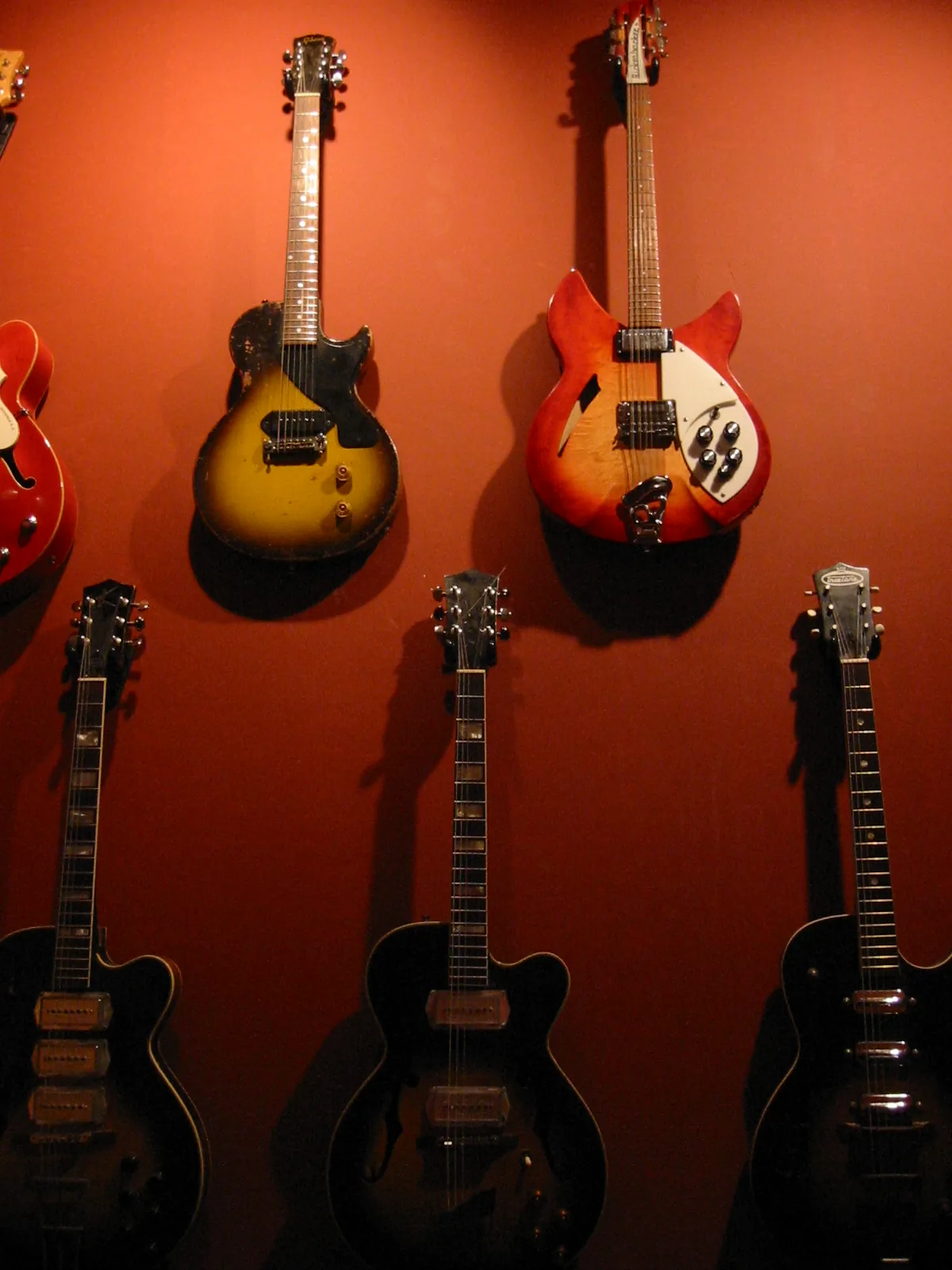
- Hard rock: a 4/4 pulse, blues influence, direct chorus and live energy.
- Heavy metal: a heavier beat, greater speed, theatrical vocals and a dramatic atmosphere.
- Modern metal: dense production, complex arrangements or electronic elements.
In the 1980s, Metallica, Megadeth, Slayer and Anthrax pushed the pace with thrash metal. Their precise playing foreshadowed several styles heard today. In 1991, Nirvana’s album Nevermind shook audiences worldwide and brought grunge to the forefront.
In the late 1990s, Rammstein, Ministry, Nine Inch Nails and Marilyn Manson combined machines, martial rhythms and distorted guitars. Since the early 2000s, Airbourne, Wolfmother, The Answer and Ghost have kept these sounds popular. To continue exploring, see this guide to metal music.
Comparison makes the distinction clearest: AC/DC favours groove, Iron Maiden cultivates an epic scale, Metallica sharpens the attack, while Ghost modernizes the conventions.
Conclusion
Across the decades, this history reveals a rich evolution. Hard rock retains a direct connection to the blues, carried forward by AC/DC, Led Zeppelin and Guns N’ Roses. Its groove makes each song immediate, lively and accessible.
Heavy metal developed into darker, more aggressive and more complex music. Black Sabbath laid its foundations with a landmark album. Iron Maiden, Judas Priest and the various branches of metal then strengthened its identity.
Rock history does not follow a single path. Modern metal now embraces new textures. To learn more, explore this overview of musical styles.
In short, bluesy groove or dark power: each style has its own traits. Ghost, Airbourne and other artists keep them alive onstage. Today’s genre fusions also show how creative these styles remain.