
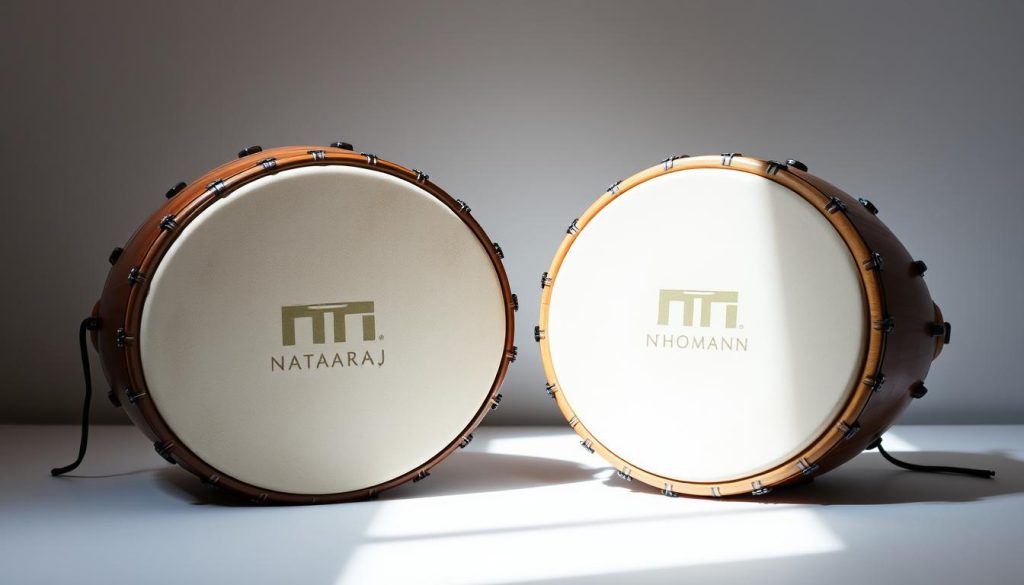
Goal: this article helps readers choose between two brands when buying a tongue drum in France. It considers budget, intended use and perceived quality.
We compare their approaches: one offers Akebono and Pygmy scales, popular for relaxation; the other offers accessible C major models suited to learning. This contrast helps guide your first choice.
The comparison covers sizes (8″, 10″, 12″, 14″, 16″), the number of notes, included accessories and construction. These factors affect how easily you can learn and how freely you can play.
Key criteria include tuning accuracy, stability, sustain, ease of playing with hands or mallets, and durability. We also cover technical details, compare models by use and budget, and examine the leading options.
Ultimately, overall quality and ease of playing remain the priorities for a first instrument.
Why compare Nataraj and Thomann now?
In 2025, the growing popularity of intuitive percussion makes a focused comparison of these two ranges useful. The market offers both beginner models and instruments intended for meditation. Your choice will affect the time you spend learning and your daily practice.
Key points to consider:
- The 10″ and 14″ C major versions are intended for beginners and often include accessories.
- The 8″, 12″ and 16″ Akebono or E‑Pygmy models favor meditative sounds; A is sometimes tuned to 443 Hz.
- Models have between 8 and 15 notes: more notes provide more melodic possibilities.
- For stage and studio use, handpans measuring 51 to 57 centimeters in diameter are available.
Comparing models now may also help you find stable prices and available stock before seasonal increases. Accessories—mallets, a case and finger picks—make the instrument easier to start playing and help protect it.
For a full comparison guide, see our dedicated article: best tongue drum comparison.
Quick pointers for reading this comparison
To make sense of this guide quickly, start with a few simple points about size and sound.
Diameter and ease of playing. The 8″ and 10″ models are compact and easy to carry. Their volume is moderate, but playing them by hand calls for greater precision.
The 12″ size strikes a good balance between comfort and sound projection. The 14″ and 16″ sizes offer more volume and longer sustain, useful for relaxation and held notes.
Scales and keys. C major makes learning and reading melodies easier. Akebono and Pygmy scales favor meditative sounds and make clashing notes less likely, encouraging improvisation.
Construction, design and sound. Stainless steel extends sustain; nitrided steel improves note stability. A textured finish improves grip, while a protective rim guards the edge.
Practical points:
- On smaller models, playing by hand can produce a metallic sound; mallets soften the tone.
- Check the stated tuning accuracy (for example, A = 443 Hz) to assess the instrument’s quality for musical use.
- To put the options in context, see the Thomann and Nataraj comparison later in this article.

The main comparison: Nataraj vs. Thomann by use and budget
Use this guide to find the model that fits how you play and what you can spend.
Getting started on a budget: the 10″ C major model (11 notes) is ideal for learning. It comes with accessories at a very accessible price. The compact, azure blue 8″ A‑Akebono model favors a relaxing atmosphere, but it can sound metallic when played directly by hand.
Versatile midrange choices: the 14″ C major model has 15 notes and offers more melodic possibilities. The 12″ A‑Akebono model is musical enough for relaxation and improvisation, though it is not aimed at professionals.
“For learning, choose C major; for meditation, look to Akebono or Pygmy.”
- Travel: the 8″ and 10″ models are easy to carry and have shorter sustain.
- Meditation: Akebono and Pygmy scales offer stable notes and enveloping sustain.
- Value for money: the C major model stands out for learning; the other option favors calming sounds.
| Use | Suggested model | Key points |
|---|---|---|
| Getting started | 10″ C major, 11 notes | Accessible price, accessories included, easy to learn |
| Compact and portable | 8″ A‑Akebono | Highly portable, relaxing sound; take care when playing by hand |
| Versatile playing | 14″ C major, 15 notes | More melodies, textured surface, wider melodic possibilities |
| Relaxation | 12″ A‑Akebono | Good musicality, versatile for meditation |
Nataraj focus: the models that matter here
This selection highlights three representative sizes, from compact to powerful, to help you choose for your playing style.
8″ D‑Akebono — compact size. This Nataraj tongue drum has eight notes (from D3 to F4: D3, E3, F3, A3, A#3, D4, E4, F4). Its small diameter shortens sustain. The sound carries, but it can seem metallic when played by hand. Tuning at A = 443 Hz and an azure blue design appeal to traveling musicians.
12″ A‑Akebono — versatile. Eight notes centered on A, from C1 to C2, provide very good musicality for improvisation. This model balances projection and portability. Its construction delivers consistent tuning, with a character close to HAPI.
16″ E‑Pygmy — power and nuance. Ten steel tongues (from E3 to D5) have a matte blue finish. Sustain is longer, and the sound fills the space more fully. It offers excellent value for a meditation instrument suited to small stages.
In short, the range supports different uses: travel and playing by hand or with mallets, with a consistent sound thanks to stable tuning.

| Model | Notes and range | Main advantage |
|---|---|---|
| 8″ D‑Akebono | D3 to F4 (8) | Highly portable, pentatonic, ideal for relaxation |
| 12″ A‑Akebono | A, B, C1 to C2 (8) | Very good musicality, versatile |
| 16″ E‑Pygmy | E3 to D5 (10) | More nuance, sustain and power |
Thomann focus: strengths and representative models
A closer look at a range that offers beginner options as well as more demanding instruments.
Thomann Tongue Drum 10″ — a C major model suited to learning. It has 11 listed notes, an attractive navy blue design and the usual accessories (mallets, case, finger picks). It is an excellent starting point for learning to play and read music.
Thomann Tongue Drum 14″ — diatonic C major with 15 notes (from E to E2). Its considered design includes a textured, nonslip surface and a protective rim. More space between notes makes it more comfortable to play and improves projection.
Handpan D Celtic Minor 440 — a different instrument within the range: made of stainless steel and tuned to 440 Hz, with long sustain and a rich dynamic range. Supplied with a case, it measures 53 cm and weighs 4.2 kg. It is intended for demanding stage and studio musicians.
“The right choice depends on use: learning and musical discovery with the 10″ and 14″ models, or more advanced playing with the Celtic Minor handpan.”
| Model | Advantage | Recommended use |
|---|---|---|
| 10″ C major (11 notes) | Accessible price, accessories included | Beginners, musical discovery |
| 14″ C major (15 notes) | Considered design, comfortable to play | Home practice, workshops |
| Handpan D Celtic Minor 440 | Stainless steel, sustain, case included | Advanced musicians, stage |
Construction and quality: steel, finish and accessories
The secret to a good instrument often lies in its steel and surface treatment. The choice of metal directly affects sustain, strength and tuning stability.
Stainless steel or nitrided steel
Stainless steel: favored for its long sustain and good corrosion resistance. The stainless steel D Celtic handpan illustrates this with rich, stable sustain.
Nitrided steel: the nitriding process used in manufacturing hardens the surface. For example, the Patera HPDM-2 (55 cm) shows excellent stability and greater durability.
Finishes, cases and mallets
The design of the tongues and their even thickness support accurate tuning and a consistent response.
Accessory packs (padded cases, mallets and finger picks) make the instrument easier to use and improve the balance between quality and included equipment. A textured surface and protective rim guard the vulnerable area around the edge.
“A good ventilated case and wiping the instrument after playing help preserve note stability.”

| Component | Advantage | Advice |
|---|---|---|
| Stainless steel | Long sustain, corrosion resistance | Ideal for the studio and outdoors |
| Nitrided steel | Strength, tuning stability | Frequent use, stage |
| Accessories | Protection and comfort | Choose a complete starter pack |
To learn more about value for money and explore detailed comparisons, see our full guide: best handpan comparison.
Prices and value for money in France
Choosing an instrument often depends more on price and playing comfort than on appearance.
Under €200: for musical discovery, the 10″ model mentioned among the best under €200 remains a benchmark. It comes with a case and mallets, limiting the financial risk and making it easier to begin.
Between €200 and €900: this range offers a noticeable step up. The 14″ versions and sizes from 12″ to 16″ improve note stability, projection and playing comfort.
- A very good option: the 16″ E‑Pygmy stands out for excellent value and remarkable volume.
- Materials: stainless or nitrided steel improves tuning stability and often justifies a higher price.
- For regular practice, spending between €200 and €900 can bring a real improvement in playing comfort.
- Online availability, customer reviews and demonstrations can help you assess a purchase in France.
Tip: choose a pack with a case and mallets to save money and improve value.

Keys and notes: choosing the right scale for your music
To choose the right scale, start by listening for how you want to feel when you play. The scale shapes your style, how you use the instrument and how you progress. Here is a quick guide to matching scales to your playing.
Akebono (D / A)
Meditative sounds: ideal for relaxation and instinctive improvisation. The 8″ (D) and 12″ (A) models, tuned at A = 443 Hz, produce few dissonances.
Advantage: intuitive playing and dependable notes for relaxation.
Celtic Minor / Kurd
Deep, bright Celtic sounds. The D Celtic Minor handpan at 440 Hz and the RAV Vast D Celtic Minor (9 notes, 51 cm) produce rich vibrations and long sustain.
Advantage: ideal for soundscapes and melancholy pieces.
C major
This scale, common on diatonic 10″ and 14″ models, makes it easier to play melodies, read music and learn musical basics.
Advantage: a straightforward route to mastering notes and sounds.
- Choose by musical style: contemplative → Akebono; Celtic → Celtic Minor/Kurd; songs → C major.
- Check the range (8 to 15 notes): more notes provide more melodic options.
- Sustain: larger diameters support longer notes.
- Attack: mallets produce a clear sound, while hands give a more organic tone.
| Scale | Use | Key point |
|---|---|---|
| Akebono | Meditation, improvisation | Few dissonances, A = 443 Hz |
| Celtic Minor / Kurd | Soundscapes | Rich vibrations, long sustain (440 Hz) |
| C major | Learning | Easy to read, diatonic scale |
“A well-tuned instrument produces harmonious vibrations that are pleasant to the ear and body.”
Recommendations by musician profile
Choose your instrument according to your experience, available time and playing environment.
Complete beginner
Recommended choice: the 10″ C major model, which provides clear reference points. It makes learning and reading music easier.
Another simple option is the 8″ D‑Akebono for a calming sound and intuitive playing.
Meditation and relaxation
Choose a 12″ or 16″ model for long sustain and stable notes. RAV Vast and Metal Sounds Zenko offer rich textures.
Children and families
Choose small, light, sturdy instruments between 8″ and 10″. Packs with a case and mallets are preferable for safe use and transport.
Experienced musicians
Look for premium construction in stainless or nitrided steel. Models such as the Handpan D Celtic Minor 440, Sela D Kurd or Patera D Minor suit professional use.
| Profile | Suggested model | Why |
|---|---|---|
| Beginner | 10″ C major (Thomann) | Clear reference points, accessories included |
| Meditation | 12″/16″ (Nataraj), RAV Vast | Long sustain, gentle sound |
| Children | 8″–10″ | Light weight, case and mallets |
| Experienced | Handpan D Celtic Minor 440, Patera | Wide dynamic range, stability |
Practice: 10 to 15 minutes a day is enough to make progress; record your sessions to track your development.
Premium alternatives if you are undecided
If you want better quality, several premium instruments are worth trying first.
Sela Melody & Harmony D Kurd: German manufacture, professional tuning and premium materials. The Melody (nitrided steel, 57 cm) offers nine notes (D3, A3, B flat3, C4, D4, E4, F4, G4, A4) and a padded case. The handmade stainless steel Harmony offers a bright, lasting sound quality.
Patera D Minor HPDM-2: hardened nitrided steel, 55 cm, designed for strength and tuning stability. Professionals appreciate its balanced tone and how well it holds its tuning over the years.
RAV Vast — D Celtic Minor and other variants: 9 notes, long sustain and rich vibrations. Careful finishing and alternatives such as G Minor and B/H Kurd let you match the sound to your playing.
“These premium instruments suit stage musicians, recording professionals and demanding players thanks to their precise tuning and remarkable sustain.”
- Design and ease of playing: elegant finishes and professional cases included for transport.
- Melodic percussion: dynamic response and accuracy for recording.
- Value for money: a higher investment, but greater musical value and longevity.
| Model | Material | Key points |
|---|---|---|
| Sela Melody D Kurd | Nitrided steel, 57 cm | Nine notes, professional tuning, padded case |
| Sela Harmony D Kurd | Stainless steel | Handmade, bright tone, German manufacture |
| Patera HPDM-2 | Hardened nitrided steel, 55 cm | Strength and tuning stability valued by professionals |
| RAV Vast D Celtic Minor | Steel, 51 cm | 9 notes, long sustain, captivating sounds |
Nataraj or Thomann: which tongue drum should you choose?
Choosing an instrument calls for careful listening and a few clear priorities. Here is a quick summary to help you decide.
Quick choice
For gentle sounds and relaxation: favor Akebono and Pygmy scales (8″, 12″, 16″ sizes). These models encourage intuitive playing and enveloping textures.
For learning melodies: choose a 10″ or 14″ C major model supplied with a case and mallets. These make reading music and doing learning exercises easier.
Checklist before buying
- Diameter: 8″ to 16″, depending on the portability and sustain you want.
- Scale: C major, Akebono or Pygmy, depending on use.
- Number of notes: 8 to 15; more notes provide more options.
- Price:
- Accessories: a case and mallets are essential for transport.
- Use: musical discovery, meditation or stage performance; choose suitable stability and sustain.
Quality checks: tuning accuracy, note stability, sustain and finish. Design is a personal choice, but a textured surface improves grip.
“Two complementary paths: one suited to learning, the other to immersive playing. Choose according to your musical aims.”
| Criterion | Recommended option | Why |
|---|---|---|
| Getting started | 10″ C major (Thomann) | Affordable price and accessories included to get started |
| Meditation | 8″/12″/16″ Akebono/Pygmy | Gentle sound, few dissonances, enveloping sustain |
| Demanding player | Handpan D Celtic Minor (Thomann) | Long sustain, premium materials, stage and studio use |
Final tip: try playing with hands and mallets, listen to demonstrations and choose a complete pack so you can begin with confidence.
Conclusion
In practice, tuning accuracy and comfort make the difference between two similar models.
Summary: for learning and reading music, the 10″ and 14″ C major models provide an excellent starting point with accessories. For meditative sounds, choose an 8″, 12″ or 16″ Akebono or Pygmy model. Premium handpans (D Celtic, Sela, Patera, RAV) are aimed at professionals and often measure 51 to 57 centimeters in diameter.
Practical advice: define your intended use (musical discovery, relaxation or stage) and budget, then listen to demonstrations. To explore instrument choices and compare professional models, see our best handpan comparison.
Next step: list your intended use, budget and preferred scale, then listen or try an instrument before buying. Regular practice will soon reveal its quality and the pleasure of playing.