
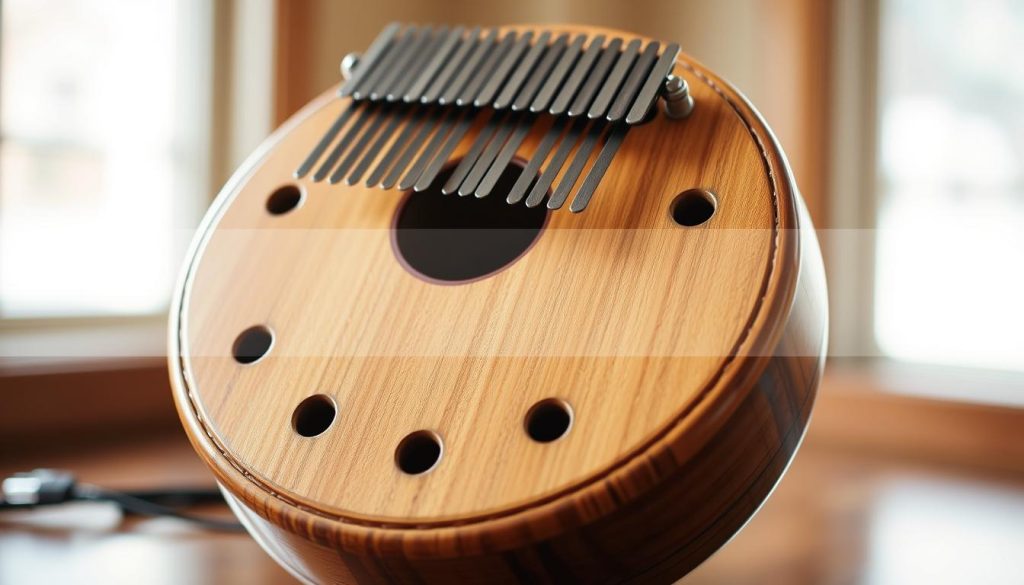
Goal: this guide gives you a clear, practical starting point. It helps you define how you will use the instrument, set your budget and identify the essential criteria before buying.
What should you look for? The number of tongues and notes, size, tuning (440 Hz or 432 Hz), scale, material and accessories all affect the sound and how you use the instrument.
Note that 11 tongues provide 11 playable notes. Small models are portable and lively; larger ones offer fuller bass notes.
Indicative prices in France: around €50 for a small model, €100 to €200 for a generic model with 10 to 15 notes, and more than €700 for established brands.
Finally, the difference between a branded and an unbranded model is not always proportional to the price. This article explains each criterion with practical examples to help you choose.
Quick buying guide: how to use this article to make the right choice
First, decide how you mainly want to play: follow familiar sheet music or focus on improvisation and relaxation. This decision guides everything else: the number of notes, scale and size.
Follow the sections of this article in order to work through the criteria: intended use, number of notes, diameter, tuning frequency, scale, material, accessories, budget and where to buy.
As a rule, aim for 8 to 11 notes if you want simplicity, or 11 to 15 for greater versatility. A diameter of no more than 25 to 30 cm remains easy to carry.
Choose 440 Hz if you want to play easily with other instruments; 432 Hz is available but makes group playing more difficult. Assess the material and accessories too: mallets and a case quickly prove useful.
| Criterion | Recommended option | Why |
|---|---|---|
| Intended use | Sheet music or improvisation | Guides the choice of scale and number of notes |
| Number of notes | 8 to 11 or 11 to 15 | Simplicity or versatility |
| Size | No more than 25 to 30 cm | Easy to carry, with a good balance of weight and sound |
Set your budget after considering these points: expect to pay €100 to €200 for a good unbranded model with 10 to 15 notes, and more for an established brand. For more detail, read the complete buying guide, which explains each criterion with practical examples.
Which tongue drum brand should you choose as a beginner?
Choosing between a branded model and a generic instrument often affects the price more than the sound quality.

Established brand or generic model
Benefits of a brand: support, warranty and prestige. Names such as Zenko, Himalaya Blessings, Rammerdrum, Rav Vast and Nataraj sometimes justify a high price.
Limitations: a brand can double or triple the cost. Some branded instruments are repackaged generic models. The improvement in sound may be marginal.
Practical advice
- To learn without spending too much, start with a good generic model with 11 to 15 notes for around €100 to €200.
- Compare audio demonstrations of models with the same scale and number of notes before buying a tongue drum.
- Consider the warranty and after-sales service if you play often.
“Paying for a brand may be tempting, but let the number of notes, scale and size guide your choice.”
| Option | Indicative cost | Why |
|---|---|---|
| Generic (10 to 15 notes) | €100 to €200 | Good value for money |
| Established brand | More than €700 | Support and brand reputation |
| Resale | Often | a substantial loss in value is possible |
Define how you will play: familiar pieces or intuitive playing
Whether you mainly want to play written pieces or play intuitively directly shapes your choice of instrument.
Playing from sheet music: choose a diatonic model with 11 to 15 notes.
Simple tunes such as “Happy Birthday” can often be played on 11 notes, but pieces such as “The Sound of Silence” generally need 15 or more.
Playing from sheet music: more notes for more melodies
Benefit: a wider range lets you play more melodies and makes it easier to learn from tutorials.
Intuitive playing and meditation: simplicity and immediate enjoyment
For relaxation, a five-note pentatonic instrument or an 8- to 10-note model is enough.
This choice reduces “wrong notes” and encourages improvisation.
Playing with your fingers or mallets changes the attack and sustain: try both to see what best suits your practice, whether relaxation, accompaniment or learning.
| Intended use | Recommended setup | Why |
|---|---|---|
| Varied sheet music | 11 to 15 diatonic notes | Lets you play a broad range of teaching pieces |
| Intuitive playing and meditation | 5 notes (pentatonic) or 8 to 10 notes | Simplicity, fewer mistakes and a quick start |
| Practical test | Try fingers and mallets | Helps you find the attack and sustain that suit your playing |
How many tongues (notes) should you choose for your needs?
The number of tongues directly affects the pieces you can play and how easy the instrument is to learn. More notes offer more possibilities but increase the instrument’s complexity, size and price.

Adult beginner: 11 to 15 notes
11 to 15 notes suit adults who want to play varied pieces and explore music theory.
With 15 tongues, you can play more complete pieces: one notable example is “The Sound of Silence,” which can be played comfortably with 15 notes or more.
Children and new musicians: 8 to 11 notes
For children and beginners, 8 to 11 notes reduce frustration and make learning easier.
Fewer notes mean fewer mistakes and faster progress over months or years.
Practical points
- Adults: aim for 11 to 15 notes for versatility and a wider repertoire.
- Children and beginners: choose 8 to 11 notes for a relaxed start.
- Six to eight notes are enough to create beautiful soundscapes, but limit the familiar pieces you can play.
- The price of an unbranded 10-note instrument varies by model.
“An instrument suited to your playing is better than one that is too complex: start simply and add more notes if needed.”
| Player | Recommended number | Why |
|---|---|---|
| Adult | 11 to 15 | Wider repertoire and musical exploration |
| Children and beginners | 8 to 11 | Less complexity and relaxed learning |
| Ambient playing | 6 to 8 | Easy to play, but limited choice of sheet music |
Size and diameter: portability, resonance and interference between tongues
The space available for the tongues affects how clearly and evenly the notes sound.

Small or large models
A diameter of no more than 25 to 30 cm makes the instrument easy to carry. It often weighs less than 2 kg and fits in a backpack.
Small models produce lively sounds with a quick attack. Larger models produce deeper tones and longer sustain.
Interference between nearby tongues
On a small drum with many closely spaced tongues, striking one note can make neighboring tongues vibrate. This creates a harmonic halo that some players enjoy.
By contrast, musicians seeking pure notes prefer a larger diameter with six to eight tongues; greater physical separation reduces overlap.
- Listen to audio demonstrations before buying.
- When playing in a group, clearer notes blend more easily with other instruments and percussion.
- Room acoustics and playing technique (mallets or fingers) also affect this interaction.
- Large models often need a sturdier case for protection.
| Criterion | Small diameter (no more than 30 cm) | Large diameter |
|---|---|---|
| Portability | Excellent | Bulky and harder to carry |
| Sound | Lively tones and quick attack | Deep tones and long sustain |
| Interference | More overlap between tongues | Better separation between notes |
To compare models and sizes, read this practical guide to choosing the right size.
Tuning frequency: 440 Hz or 432 Hz for this instrument
Tuning frequency sets the reference pitch and makes playing with other musicians easier or harder.

440 Hz is the standard reference in Western music (A4 = 440 Hz). Most instruments and recordings use it. It makes group playing and finding learning resources easier.
432 Hz lowers every note slightly. Some players describe a relaxing effect, but this has not been scientifically proven. In France, models tuned to 432 Hz remain less common and are often more expensive. Their price may therefore be higher.
Perceived effects, availability and price
The benefits attributed to 432 Hz often come down to personal preference. If you mainly play alone in a meditative setting, you may enjoy this tuning.
Playing together: compatibility and practical advice
If you play with other musicians, choose 440 Hz for immediate compatibility. Manual adjustments are possible, but may not remain reliable over time.
“Try the same model at 440 Hz and 432 Hz to judge the difference in sound before buying.”
| Aspect | 440 Hz | 432 Hz |
|---|---|---|
| Compatibility | Excellent | Limited |
| Availability | Wide | Fewer models |
| Price | Standard | Often higher |
Choosing a scale and key: major, minor and popular modes
Depending on the scale, the same piece can sound cheerful or deeply melancholic. Your choice of key shapes the mood and how easily you learn to play.
Major or minor: mood and emotion
A major scale sounds bright and warm. It makes reading sheet music easier and appeals to beginners who want to play familiar melodies.
A minor scale has a darker, more introspective character with plenty of nuance.
Pentatonic, diatonic or chromatic: musical possibilities
Pentatonic: five notes. Very accessible and often described as having “no wrong notes.” Ideal for relaxation and improvisation.
Diatonic: seven notes (C, D, E, F, G, A and B). Well suited to teaching pieces.
Chromatic: 12 notes. It offers the widest range of notes, but is rare and more complex to master.
Multiple scales using magnets: versatility and cost
Magnet systems provide several scales on one instrument. Their advantage is immediate versatility.
Drawback: a high price (around €400 to €500). At that price, buying two separate instruments may make more sense.
- For sheet music: C or F major for a broad repertoire.
- For intuitive playing: D minor or Amara for immediate expression.
- Remember that the number of notes and arrangement of the tongues affect how smoothly you can play.
Listen to demonstrations of each scale and try the instrument before buying. To explore the subject further, read our complete guide.
Materials and construction: steel, stainless steel, nitrided steel and titanium
The shell’s material mainly affects durability, care and price, more than the character of the sound. For a considered purchase, prioritize stable tuning over material.
Standard steel remains the most common choice. It offers good value for money and warm tones on most models.
Stainless steel resists corrosion better. It requires little care and suits players who often carry their instrument.
Nitrided steel is treated to last: it resists impacts and moisture. Benefit and price: it is useful if you often play outdoors, but costs more.
Titanium alloys offer an appealing balance of tone and strength. They remain uncommon and can raise the price of premium models.
- Material has a slight effect on tone, but size, number of notes and scale remain decisive.
- A protective coating improves appearance and resistance in damp conditions.
- Care, including wiping the instrument and storing it in a case, extends its life regardless of its material.
| Material | Strength | Drawback |
|---|---|---|
| Steel | Reasonable cost, good sound | Less durable without a protective finish |
| Stainless steel | Resists corrosion | Higher cost |
| Nitrided steel or titanium alloy | Very durable, ideal outdoors | High price, limited availability |
“First prioritize tuning quality and stability; consider the material next.”
When listening to comparisons, keep the diameter and number of notes the same to hear the alloy’s actual effect. Model and color availability varies among manufacturers in France.
Useful beginner accessories: mallets, stickers and carrying case
Well-chosen accessories make learning an instrument much easier.
Accessories that help with your first sessions are simple and inexpensive.
- Suitable mallets: they provide a clear attack and protect the tongues.
- Note stickers: visual labels help you follow a booklet and memorize scales.
- A sheet music booklet in French: it provides motivation and helps you progress quickly.
- A padded carrying case: it protects the finish and shell during travel.
- Finger protectors if you prefer playing with your hands.
What you really need to get started well
Do not base your purchase on accessories: prioritize the quality of the shell first.
Playing with mallets or fingers changes the attack and sustain. Trying both approaches helps you choose the one that suits your musical practice.
For children, light mallets and stickers help maintain interest and make the notes easier to find.
| Accessory | Use | Advice |
|---|---|---|
| Mallets | Clearer attack | Have a spare pair |
| Stickers | Finding notes | Apply them according to the booklet |
| Carrying case | Protection | Choose a padded model |
“Bundles with many accessories are tempting; the quality of the shell remains the deciding factor.”
A microfiber cloth makes cleaning easier, and a short booklet speeds up learning. Your needs change with your practice—performance, meditation or lessons—and most accessories can be bought separately.
Budget, comparisons and where to buy in France
A clear budget makes it easier to compare small portable models with large resonant drums.
Price ranges by size and number of notes
Small models (around 20 to 25 cm, with about 10 notes): often priced below €100.
Unbranded models with 13 to 15 notes: generally €150 to €200.
Branded or unbranded: value for money and resale
Generic models offer excellent value for learning. They put the number of tongues and tuning stability ahead of appearance.
These instruments rarely resell for more than 50% of their purchase price.
Where to buy: physical stores and online shops
Specialist shops are rare in France. Comparing instruments online is practical: read reviews and listen to audio demonstrations.
Recommended places to buy include Instruments du Monde, major marketplaces and cultural retailers with clear return policies.
Before buying a tongue drum, always check the warranty and return policy.
Practical advice
- Prioritize the number of notes you need and the size over appearance.
- If the instrument is for children, choose a complete, sturdy bundle with visual note markers.
- Look for promotions to get a better price.
- Read a comparison of the best models before deciding.
| Price range | Example | Why |
|---|---|---|
| Under €100 | 10 notes, small diameter | Portable and ideal for trying the instrument |
| €150 to €200 | 13 to 15 notes, unbranded | A good balance of repertoire and price |
| Over €700 | Premium model | Warranty, finish and support |
“The best choice suits how you play; it is not necessarily the most expensive model.”
Conclusion
To conclude this guide, follow a simple process: first decide whether you want to play from sheet music or use the instrument for relaxation, then choose the number of notes and scale accordingly.
For group playing, prefer 440 Hz. If you play alone in a meditative setting, 432 Hz remains a personal and less common choice.
Aim for 11 to 15 notes and a major scale (C or F) for melodies learned from sheet music. For improvisation, choose D minor, Amara or a pentatonic scale; a few notes are enough to create beautiful sounds.
Small drums are easy to carry but can have interference between tongues; listen to them to judge for yourself. A good, well-tuned generic model is often the best first investment.
Reread this article as a step-by-step guide and consult this selection guide if you want to explore certain points further before buying.