
Welcome: this article will help you understand your instrument’s notes, scale, and key.
How the instrument is made determines its range of sounds. Its surface limits the number of tongues, which often ranges from 6 to 15 and sometimes reaches 18 to 20.
The notes most often fall between the 3rd and 5th octaves. The tuning is fixed; the reference frequency may be 440, 432, or 528 Hz, changing the pitch without changing the note names.
We explain how to identify each note with a tuner or by using numbers from 1 to 7 according to the key. Practical examples (15-note C major, 11-note D major, 11-note G major, and 8-note C major) will help beginners and experienced musicians alike.
Finally, this article will help you choose the best configuration so you can play with confidence. For more technical details, see this guide to notes and chords.
Introduction to the tongue drum and its musical notes
The tongue drum has cut tongues that produce clear, soothing sounds. Made of steel or wood, it remains compact while offering rich resonance.
Accessible to beginners, this instrument can be played with fingers or mallets. It is widely used in meditation, sound yoga, and early compositions.
Unlike the piano, with its 88 keys spanning more than 7 octaves, this instrument has relatively few notes (usually 6 to 15, sometimes 18). The maker chooses which notes to include during construction.
The same model can be made in a major or minor key, changing its emotional character. Common configurations include diatonic and pentatonic scales.
- The tongues are sometimes numbered to make learning easier.
- The limited number of notes makes improvisation easier without hitting notes outside the scale.
- This article covers how the instrument works, its scales and keys, and practical examples.
| Feature | Typical value | Use |
|---|---|---|
| Number of tongues | 6 to 15 (up to 18) | Meditation, performance, composition |
| Material | Steel or wood | Warmth or brightness |
| Common scales | Pentatonic, diatonic | Easy for beginners |
To explore further and choose the best configuration for your needs, read this practical guide to keys and buying considerations.
How tongue drum notes work: range and limitations
Every instrument has its limits: the usable surface and the way the tongues are cut determine how many sounds it can produce. In practice, a tongue drum usually has 6 to 15 notes. Some larger models reach 18 to 20 notes, depending on their size and the arrangement of the tongues.
How many notes?
The instrument’s design sets a limit. As the number of playing areas increases, the cuts move closer together, making resonance and accurate tuning harder to achieve.
Comparison with the piano
A piano has 88 keys spanning more than 7 octaves. Here, the number of notes is deliberately limited to encourage intuitive, meditative playing.
Octaves and frequency
The notes often fall between the 3rd and 5th octaves, producing a clear sound. The tuning is set during manufacture and can rarely be changed.
“A C note keeps its name, but sounds different with a 432 Hz, 440 Hz, or 528 Hz reference frequency.”
To identify the sounds with a tuner, set its reference frequency. The quality of the material and the thickness of the steel affect tuning stability and dynamics.
Tongue drum scales: pentatonic, diatonic, and chromatic
Each arrangement of intervals gives the instrument its own musical character. Here is an overview of the main scales used on this instrument.
Pentatonic scale
The pentatonic scale has 5 notes with no adjacent semitones. It produces a gentle sound, is simple to play, and is ideal for improvisation.
Diatonic scale
The diatonic scale has 7 notes. Examples include C major (C D E F G A B) and D major (D E F# G A B C#). It offers more melodic possibilities while remaining accessible.
Chromatic scale
The chromatic scale contains 12 semitones. Rare on this type of instrument, it offers the greatest versatility when a model includes it.
The same scale in different octaves
The same notes sometimes appear in more than one octave. This widens the range and adds variety to musical phrases.
To try different scales and keys and discover configurations that inspire you, see this page on scales and keys.
Tongue drum notes: major and minor scales
A few notes in a particular key can change the mood of a piece. The key immediately shapes its emotional character and the melodies you can create.
Bright keys
Major keys bring joy, warmth, and clarity. They suit beginners particularly well because they make simple patterns easy to combine.
Typical examples are C major and D major. These choices encourage lively melodies and help engage audiences in workshops or on stage.
Introspective keys
Minor keys offer a darker, more contemplative sound. They are well suited to meditation, deep relaxation, and music therapy.
D minor, for example, surrounds the listener with sound and invites reflection.
Practical uses
For sound yoga or therapeutic sessions, choose a key that creates a calm atmosphere. For a performance or teaching workshop, a brighter key makes demonstrations easier.
- Try C major and then D minor to hear the difference.
- Choose according to the musical experience you want to create and your audience.
“The best key is the one that serves your musical intention.”

To deepen your understanding of this instrument’s notes, read this guide to notes.
Identifying your instrument’s notes: practical methods
Knowing your instrument’s notes makes improvisation easier. Here are two ways to identify every note and play with greater confidence.
Using an electronic tuner
Place the instrument in a quiet room. Set the reference frequency (440, 432, or 528 Hz).
Strike each tongue separately. Record what the tuner displays to make a map of the notes.
Be careful: an incorrect reference-frequency setting will give you an inaccurate reading of the musical notes.
Without a tuner
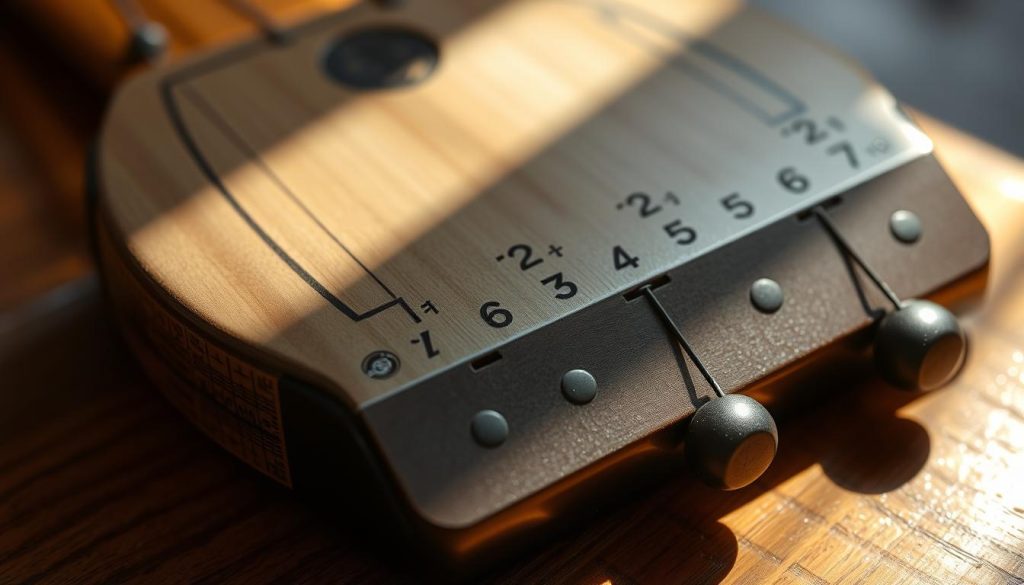
Look for the indicated key (the letter C, D, and so on) on the instrument or the invoice.
Match the numbers from 1 to 7 to the scale: 1 = tonic, 2 = second, and so on. Dots above or below a number indicate the octave.
For example, in C major, 1 = C, 2 = D, and 3 = E. In D major, 3 = F# and 7 = C#.
Draw a diagram of the playing surface and take an annotated photo. This map helps with learning, improvisation, and sharing what you know in workshops.
| Method | Key steps | Advantage |
|---|---|---|
| Electronic tuner | Find a quiet room → set the frequency → strike each tongue → record the results | Quick and accurate for every note |
| Without a tuner | Check the key → apply the numbering from 1 to 7 → identify the octaves | Requires no equipment and helps you make a visual diagram |
| Organization | Map the surface → take an annotated photo → save it | Easy to share and useful for learning |
Practical examples of note and scale configurations
To better understand the effect of different keys, let us examine some configurations found on popular models.
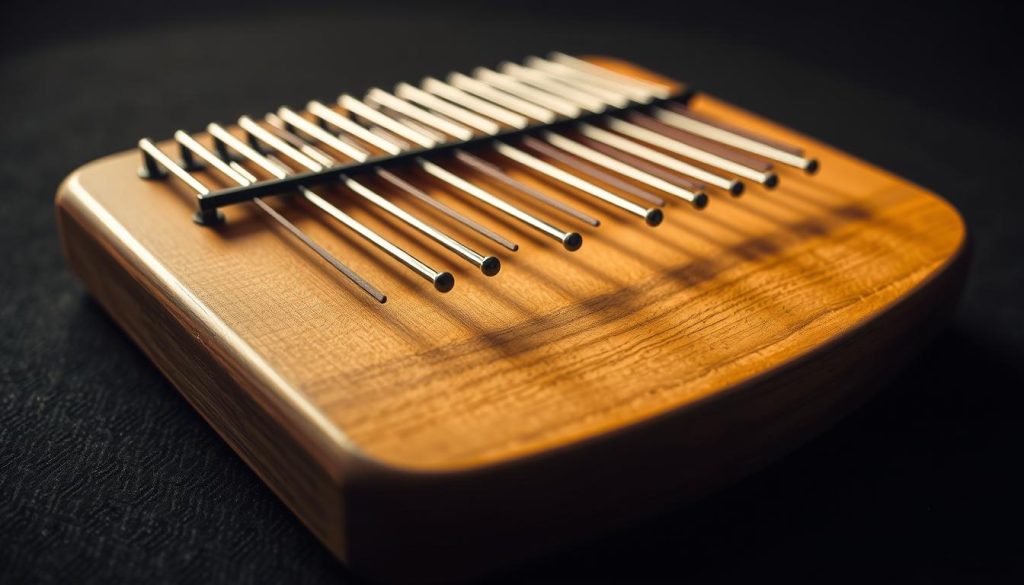
C major — 15 notes (432 Hz)
Sequence: E, F, G, A, B, C, D…
A wide range and smooth movement between octaves. This configuration has a gentle resonance and gives you ample freedom to compose longer melodies.
D major — 11 notes
Sequence: A, B, C#, D, E, F#, G…
A balance between accessibility and brightness. The sharps (F# and C#) add useful color for creating clear patterns and bright cadences.
G major — 11 notes
Sequence: D, E, F#, G, A, B, C…
Ideal for beginners who want to expand their musical vocabulary without too much complexity.
C major — 8 notes
Sequence: C, D, E, F, G, A, B, C
Perfect for beginners and children. It is easy to memorize and useful for learning which notes make up the basic scale.
- More notes often mean a range approaching two octaves, allowing you to vary the register.
- Each model serves a purpose: meditation, teaching, or performance.
- Check the key and reference frequency before buying, and record all the notes on your instrument.
Distinctive keys and scales from around the world
Exploring modes from other traditions enriches your range of sounds. These choices offer unusual colors that can transform the way you compose.
Akebono (Japan)
Akebono is a pentatonic scale from Japan. It evokes the timbres of the shamisen and koto.
On a tongue drum, this pentatonic scale creates a contemplative, poetic atmosphere.
Amara / Celtic minor
Amara is a hexatonic scale inspired by Celtic traditions. It combines simplicity with harmonic richness.
This option lets you create highly melodic patterns that are easy for listeners familiar with European music to follow.
These different keys broaden your creative possibilities. They change the density of available notes and the direction a melody can take.
- Ideal for relaxation, intimate performances, and minimalist compositions.
- Useful for teaching: listeners become more sensitive to different modes.
- Compare Akebono and Amara to find your own sound.
“A scale from another musical tradition changes how rhythmic patterns and playing dynamics relate to each other.”
| Scale | Intervals | Recommended use |
|---|---|---|
| Akebono | Pentatonic | Meditation, Japanese character |
| Amara (Celtic minor) | Hexatonic | Acoustic performances, rich melodies |
| Traditional diatonic scale | Heptatonic | Learning, Western repertoire |
To hear examples and try these choices on your instrument, visit the scales and keys page. Experiment, compare notes, and let your musical instincts guide you.
Choosing your scale and key today
To choose well, start by defining your main use. Decide whether your goal is relaxation, music therapy, or performance. This will guide your choice of scale and key and make the next decisions easier.
Goals and setting: relaxation, therapy, and performance
For relaxation and yoga, choose a gentle key that helps listeners unwind. In music therapy, stable notes and a consistent tuning reference matter for coherent sessions.
For the stage, look for a brighter configuration with a wider range so you can vary the textures. Musicians who play in an ensemble should check that their tuning references are compatible.
Skill level and ease of playing: C and D for beginners, unusual scales for advanced musicians
For beginners, C major and D major remain reliable choices: they provide simple reference points and support quick learning.
Unusual scales such as Akebono and Amara call for more technique and knowledge. Once you know the basics, they can enrich your musical experience.
- First, decide on your main use (relaxation, performance, or accompaniment).
- Try several configurations and listen to recordings before buying.
- Consider the number of notes: more notes offer more options, but also more choices to make.
- Balance budget and quality: a good instrument maintains stable tuning and remains enjoyable to play.
In short: the best choice inspires you and suits regular use. Try several configurations, then choose the one that enriches your musical experience.
Conclusion
To conclude, a tongue drum’s sound depends on its scale, key, and tuning. Along with the number of tongues, these factors determine its range, which often lies between the 3rd and 5th octaves.
Choose your scale according to its intended use: meditation, performance, or therapy. Set a tuner’s reference frequency (440, 432, or 528 Hz) and identify every note to help you improvise.
We have covered pentatonic and diatonic scales, the less common chromatic scale, and scales from other musical traditions to broaden your horizons. Begin with simple melodies and progress step by step.
To compare tongue drum notes and make a more informed choice, read this guide to tongue drum notes. The right choice will help you create lasting, personal music with this instrument.