
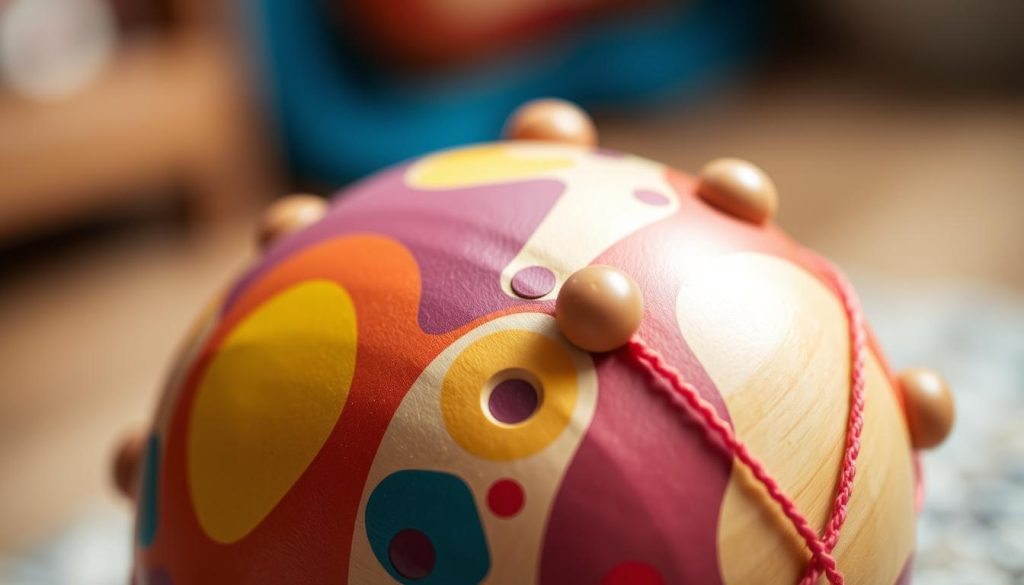
Welcome — this clear, up-to-date buying guide helps parents in France choose an instrument suited to young children. It explains how this choice supports early musical development and the gradual learning of simple melodies.
As the holidays approach, many people consider this instrument a lasting gift. Sturdy, free of fragile parts and made with rounded edges, it can be used for years at home or at school.
Its main advantage: gentle sounds that appeal to children and parents alike and encourage calm, fine motor skills and confidence.
To play recognizable melodies, look for a model with at least 11 notes in C major. For simple sensory exploration, compact models are enough. You can also try the instrument in a store such as Cultura, or check the key and number of notes carefully online, for example when looking for an 11-note model in C major.
In this article, you will find selection criteria, age-based recommendations, suggested models, places to buy and first activities to try through play.
Why choose a tongue drum for children in France today?
More and more French preschools and families are adopting this instrument for its educational qualities.
Accessible from the start: striking a tongue always produces a tuned note. This builds children’s confidence and motivates them to explore music.
Gentle sounds: the tones are soothing and cause less listening fatigue than some xylophones. Rounded edges and sturdy construction make the instrument suitable for long-term use.
Educational benefits: this instrument supports cognitive development, memory, hand-eye coordination and emotional expression. A 2014 University of Chicago study found improvements in language and learning after years of music education.
Practical use: in preschool, it can help children settle down during supervised free-play sessions or short group presentations.
| Feature | Benefit for children | Setting |
|---|---|---|
| Fixed tuning | No out-of-tune notes; greater confidence | Home, classroom |
| Sturdy construction | Years of use | Transport, sharing in class |
| Soothing sound | Less listening fatigue | Calming activities |
The modern steel tongue drum, which emerged from prototypes made between 2004 and 2007, can be a first step before moving on to more technical instruments. To learn more, see everything you need to know about the tongue drum.
Essential criteria for choosing a melodic percussion instrument
To choose a suitable instrument, start by deciding how it will be used: for free exploration or for learning melodies. This will guide your choice of note count, scale and size.

Number of notes and scale: playing melodies or improvising
To play familiar nursery rhymes, aim for at least 11 notes. A 12-inch model with 13 notes in C major expands the range of songs you can play, but makes the instrument heavier.
If improvisation is the goal, 6 to 8 notes are enough. Avoid pentatonic scales if you want to reproduce school songs faithfully.
Recommended key
The C major scale makes learning easier: it matches the piano’s white keys and many tutorials. D major has a brighter sound, but may confuse a child following lessons in C.
Diameter, weight and ease of handling
Here are some practical guidelines: models measuring 14 to 20 cm are light and manageable for younger children. A 12-inch, or 30 cm, model with 13 notes is versatile but heavier: it sometimes weighs more than 3 kg.
- Choose models suited to children, with notes clearly marked using numbers or letters.
- Check the exact number of notes and the scale on the product page, and consider a model with a carrying case.
- A steel tongue drum is durable and sturdy.
Tongue drum for children: from age 3
Age helps determine the right size: compact for toddlers and more fully featured for older children.
Under age 4
For the youngest children, choose compact, light and sturdy models. They are easy to place on a lap or on the floor.
Gentle sounds and safety: a soothing tone helps prevent auditory overload and encourages early musical development.
Ages 4 to 6
Hand-eye coordination and memory improve at this age. A medium-sized instrument with suitable mallets helps children practise rhythm.
Start with simple nursery rhymes and place coloured stickers on the notes so children can identify the tongues without reading numbers.
Ages 6 and up
From this age, consider models with 11 to 13 notes in C major for playing recognizable melodies. This range supports learning and motivation.
Alternate between hands and mallets: playing with the hands develops touch, while mallets add precision and clarity.
- Progression: start with a few notes, then gradually introduce more.
- Sturdiness: choose a stable, safe instrument that lets children play independently.
- Rhythm: plan short, regular sessions with simple goals: identifying 3 or 4 notes, then a complete scale.
Our selection of models for children and beginners
Here is a practical selection for comparing compact models with more fully featured versions.
Small models — 8 notes in C major: ideal for early exploration and easy to carry. These models are light and simple to handle.

Small 4.5- to 5.25-inch models
Examples include the compact, durable 5.25-inch Muslady with 8 tones and the lightweight, easy-to-carry OcarinaWind Mini C Major.
12 inches — 13 notes in C major
For example, the 12-inch Kudout with 13 notes can play more melodies, but its diameter and weight are greater. It is a good choice for continued learning.
| Scale | Model | Advantages |
|---|---|---|
| 8 notes (C) | Muslady 5.25-inch / OcarinaWind Mini C | Portable, easy to handle, ideal for early exploration |
| 11 to 13 notes (C) | Kudout 12-inch, 13 notes | Wider range of songs, including many nursery rhymes on the tongue drum |
| 14 to 20 cm (C/D) | Sonodrum Standard | Good value, with a case and mallets included |
Practical tip: choose according to how the instrument will be used. A small model is easier to carry. A 12-inch model lets children learn recognizable melodies. Always check the number of notes, key and supplied accessories: case, mallets and nonslip feet.
For beginners and families, pairing a mini model with a 12-inch model helps reveal the difference in sound projection and expression. The steel tongue drum, also called a steel tongue drum, remains a sturdy instrument suited to children.
Where to buy in France: Cultura, Amazon and specialist stores
A good retailer lets you hear the resonance and check the percussion instrument’s stability before buying.
Trying one in person: why visit Cultura?
Cultura has physical stores where you can find other percussion instruments, such as kalimbas and Tibetan singing bowls.
Bringing children along lets you see how comfortably they can hold the instrument, whether its playing position suits them and how easily they can produce a consistent sound.
You can also compare finishes and check the instrument’s stability on a table or on a lap.

Finding your way on Amazon: key, scale, diameter and note count
On Amazon, filter by key (C major or D major) and scale type (diatonic or pentatonic).
Check the diameter, number of notes and demonstration videos.
Read reviews to assess tuning accuracy and how evenly the notes sound.
Specialist stores and practical advice
Specialist stores, such as Instruments du Monde, often offer several models and versions intended for children.
They specify the tuning, provide suitable cases and mallets, and may offer a tongue drum model built to last.
The choice may be wider online, but trying an instrument in person remains valuable. You may find it helpful to order two sizes, compare them at home and return the less suitable one.
| Where to buy | Advantage | What to check |
|---|---|---|
| Cultura | Hands-on trial and immediate comparison | Stability, ease of handling for children, finish |
| Amazon | Wide range of models and prices, videos and reviews | Key, scale, diameter, number of notes |
| Specialist stores | Technical advice and suitable models | Tuning, included accessories, after-sales service |
For more guidance, see this practical guide to choosing and using a tongue drum.
Learning to play: hands, mallets, nursery rhymes and playful activities
Starting with small movements helps a child enjoy playing the tongue drum. Short, regular sessions support enjoyment and progress.
Simple techniques: hands or mallets
With the hands: a brief, bouncing touch with the fingertips produces clear sounds without force. It encourages gentle, expressive playing.
With mallets: sound projection and precision increase. Strike lightly to preserve the tone and resonance.
In the classroom: routines and visual cues
Use coloured stickers to identify the tongues. Make the instrument available for calming activities or use it in a guided workshop.
Nursery rhymes, memory and development
Learning simple nursery rhymes in C major helps children follow lessons and master a few melodies. Include listening games, musical echoes and short sequences to develop memory.
- Warm-up: play a simple rhythm for 1 to 2 minutes.
- Progression: begin with 3 or 4 notes, then expand the range of songs.
- Encouragement: organise short concerts for children at home or in class.
Safety, durability and care of a steel tongue drum
Good care and a few precautions are enough to keep the instrument safe and preserve its sound.
Sturdy and suitable for family use: a steel tongue drum is solid, has no protruding edges and stands up well to frequent use at home or in class.
Simple precautions for younger children: having a child play close to the floor reduces the risk of dropping the instrument, which can be heavy. Make sure their hands are clean before they handle it.
Keep mallets out of very young children’s reach. This reduces risks and helps keep the instrument in good condition.

Easy care and storage
Wipe the instrument after use and store it in a dry place. Avoid damp basements and car boots exposed to the sun.
The supplied case protects the finish and extends the instrument’s life. Nonslip feet keep it stable and improve sound projection by reducing unwanted vibrations.
- If a note sounds muffled: check how the instrument is supported and how hard it is being struck. A small adjustment is often enough.
- Durability: steel tongues retain their qualities if you avoid moisture and repeated impacts.
In short, this drum remains safe for children when these guidelines are followed. Its gentle sounds help maintain a pleasant family atmosphere and cause less listening fatigue than other percussion instruments.
Conclusion
In brief, this article offers clear guidance for choosing an instrument suited to children, whether the goal is early exploration or playing melodies.
For school songs, choose 11 to 13 notes in C major. For early exploration and easy transport, a compact 8-note model is enough. A D-major scale offers a different sound.
Start with the hands, then introduce soft mallets. In class, use stickers and short routines to structure learning.
Practical tip: try the instrument in a store such as Cultura when possible, or check its key, number of notes and diameter online. A steel tongue drum is sturdy and can support musical development for several years.