
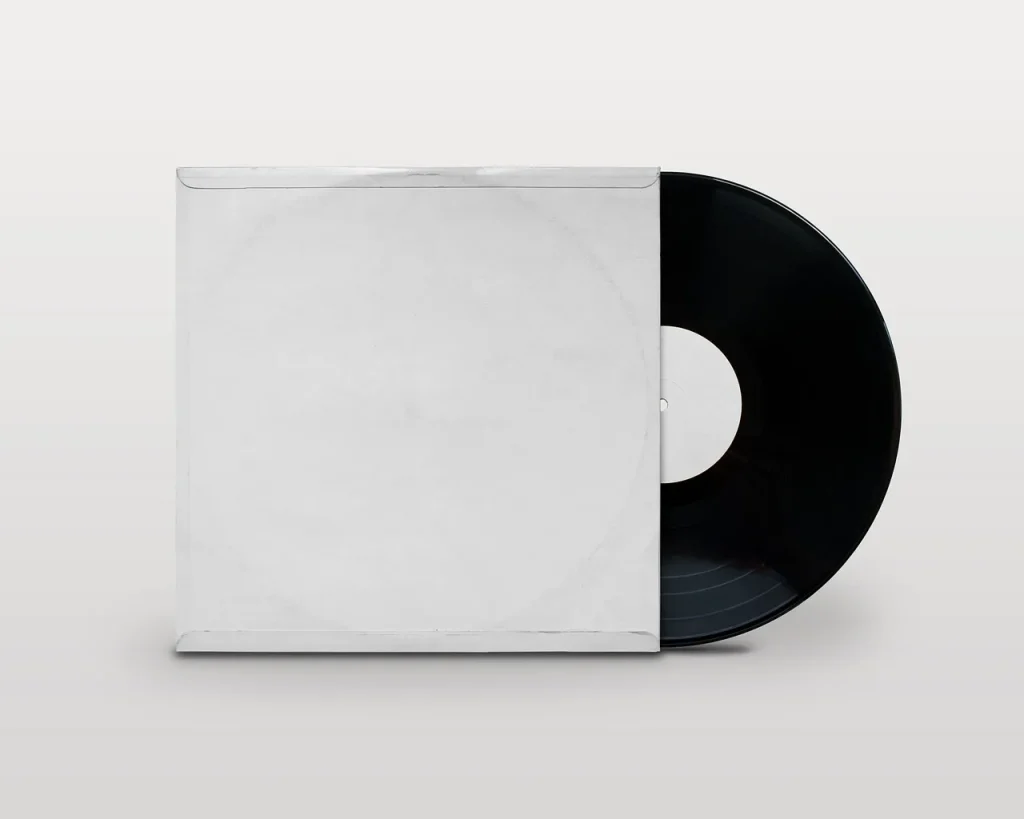
On August 12, 1991, Metallica released its fifth studio album after years of playing thrash. Its almost bare, all-black cover caught the eye immediately. With no clearly visible title, the public soon gave it a nickname that would become part of rock history.
Its reception extended far beyond specialist circles. Around 17 million copies sold in the United States, while worldwide sales exceeded 25 million. For a heavy metal record, the scale of that success was striking.
This introduction opens an examination of the album’s changing sound, its best-known songs, and its influence on several generations. We will see how an album released in 1991 broadened the band’s audience without losing its power.
One question will guide us: how did such a direct work turn Metallica into a worldwide cultural phenomenon?
Metallica’s Black Album: why it became a classic
Its identity begins with a simple contrast: the official title is the band’s name, while fans quickly adopted the nickname “Black Album.” The entirely black cover explains the name, which became familiar over the years. For more context, see the entry on the self-titled album.
A self-titled album nicknamed by fans
The record was released on August 12, 1991. Its official title is therefore Metallica, although the public prefers a more visual name. That distinction adds to its singular place in rock history.
The release that changed the history of metal
The strategy took shape before the album’s release. The single Enter Sandman came out on July 30, less than two weeks before the album. It reached number 16 in the United States and number 5 in the United Kingdom.
Those results signaled a rare breakthrough. During the 1990s, the band gradually moved beyond its specialist audience. Its music reached far more people without losing its intensity onstage.
Metallica before the Black Album: pioneers of thrash metal
In the early 1980s, the independent scene set a new pace. Metallica, Slayer, Megadeth, and Anthrax formed the core of thrash metal. Their formula hit hard: fast guitars, sharp drums, and darker lyrics. By the late 1980s, that energy stood in contrast to glam metal, which had a strong media presence.
A band shaped by the independent scene
James Hetfield, Kirk Hammett, Jason Newsted, and Lars Ulrich carried that ambition forward. In a few years, the band built a strong live reputation. The Damaged Justice Tour comprised 219 concerts around the world. It confirmed the band’s power onstage and its ability to captivate audiences.
- …And Justice for All briefly reached number six on the US charts.
- Limited radio play did not slow the albums’ progress.
- Audiences discovered fast, demanding, uncompromising music.
Recognition despite controversy
The PMRC, founded by Tipper Gore, accused some metal artists of promoting violence and pornography. That campaign pushed the genre to the margins for part of the public. Yet Metallica expanded its audience and prepared for a new chapter in its history. To trace its path, explore the band’s history.
Creating a record designed for a bigger stage
To reach a new level, Metallica reconsidered its methods. The choice of producer Bob Rock played a central role in that change.
The decisive collaboration with producer Bob Rock
Bob Rock had just finished Dr. Feelgood with Mötley Crüe. His work with The Cult and David Lee Roth had also attracted attention. The band wanted a bigger sound that could reach a much wider audience.
Recording sessions marked by tension and high standards
The sessions began in October 1990 and lasted more than six months. Bob Rock pushed each musician beyond familiar habits. James Hetfield wanted all four members together in the studio to recapture the impact of a concert.
That method created friction but strengthened their cohesion. Lars Ulrich, Kirk Hammett, Jason Newsted, and James Hetfield worked with unrelenting standards. Before completion, the project underwent three remixes.
Simpler, slower, more melodic songs
The album gradually left long song structures behind. Tempos slowed, riffs became clearer, and choruses took up more space. Every arrangement aimed for impact without sacrificing power. A more direct album emerged from a long collective effort.
Metallica’s new sound: power and accessibility
Under Bob Rock’s direction, a new sonic balance emerged. The production gave the record an ultra-heavy texture, with massive riffs, new vocal harmonies, and a distinct atmosphere for each song. Its power was immediate, while its choruses were easy to remember.
The album also adopted slower, simpler, more melodic structures. Compared with Master of Puppets or …And Justice for All, the songwriting sounded more direct. The band retained its tension but made more room for silence and vocals.
Some arrangements evoke Ennio Morricone, particularly through their strings and almost cinematic atmospheres. Those choices broadened the record’s sound without weakening its metal roots.
The song “Don’t Tread on Me” took that approach further. It incorporated several bars associated with West Side Story. The unexpected reference surprised listeners and highlighted the band’s artistic openness.
With this formula, the record reached radio listeners, MTV viewers, and pop audiences. Its songs retained their impact while inviting new listeners into the world of metal.
The Black Album’s essential songs
Each track reveals a different side of the band. The official track list contains 12 songs, but four hold a central place in the public’s memory.
Enter Sandman and Sad but True: riffs that became legendary
Enter Sandman opens the album with a hypnotic, unsettling riff. Its simple progression creates immediate tension. “Sad but True” follows with weight, a slow pace, and deep vocals. James Hetfield’s presence feels almost physical.
The Unforgiven and Nothing Else Matters: vulnerability at the heart of metal
“The Unforgiven” alternates delicate passages with bursts of sound. Bitterness and regret run through each chorus. With “Nothing Else Matters,” the band reveals a more fragile side. Acoustic guitar accompanies lyrics about long-distance relationships.
James Hetfield plays rhythm guitar, Kirk Hammett lead guitar, Jason Newsted bass, and Lars Ulrich drums. Their complementary parts give each song a strong identity.
| Song | Defining element | Dominant emotion | Musical role |
|---|---|---|---|
| Enter Sandman | Repeating riff | Unease | Opening |
| Sad but True | Heavy guitars | Tension | Impact |
| The Unforgiven | Contrasts | Regret | Nuance |
| Nothing Else Matters | Acoustic guitar | Vulnerability | Intimacy |
Unprecedented commercial success for a metal album
With the album’s release, the band reached a new level. Audiences responded enthusiastically from August 1991. Enter Sandman sold more than 500,000 copies in a few weeks. Thirty years later, its riff remained familiar far beyond rock audiences.
Record sales from the start
The record sold nearly 600,000 copies in its first week in the United States. It also topped the charts in Australia, the United Kingdom, Canada, the Netherlands, and Norway. It achieved platinum status in its second week.
That progress confirmed its exceptional popularity. Nearly 17 million copies sold in the United States and more than 25 million worldwide. The record spent more than 620 nonconsecutive weeks on the Billboard 200. Its sales thus remained remarkable years later.
The tour added to that momentum. Between October 1991 and July 1993, Metallica played 327 stadium shows. An analysis of the commercial turning point sheds light on its cultural reach.
| Measure | Result | Context |
|---|---|---|
| First week | 600,000 copies | United States |
| Worldwide sales | 25 million | Lasting success |
| Chart run | 620 weeks | Billboard 200 |
| Tour | 327 concerts | 1991–1993 |
How the Black Album won over mainstream audiences
The change in sound opened new possibilities. Metallica favored direct song formats, with short choruses and memorable riffs. For the first time, the band entered the playlists of mainstream radio stations.
Several songs received extensive exposure. That visibility attracted listeners who did not yet follow the metal scene. To explore this success further, read the analysis of the self-titled album.
“Nothing Else Matters” became the decisive song. Its intimate approach appealed to a broad audience and took the track to the top of the charts in more than 30 countries. Its music video later passed one billion views on YouTube. That success showed how far its reach extended beyond the world of metal.
Recognition followed quickly. In 1992, Metallica received a Grammy. The award confirmed the genre’s new place in the music industry.
- MTV brought these songs to more mainstream viewers.
- Annual awards ceremonies gave metal a more visible place.
- For the first time, several metal artists appeared at major media events.
The Black Album’s legacy across generations
Its influence extends beyond metal. Corey Taylor even compared Enter Sandman to “Stairway to Heaven” for his generation. The comparison underscores the power of a chorus recognized around the world.
An influence beyond metal
Songs appeared in The Sopranos, The Simpsons, South Park, and House. Films also used these songs, including Mission: Impossible 2, X-Men, The Big Short, and Zombieland.
Reissues, covers, and a lasting place in popular culture
Disney chose a new version of “Nothing Else Matters” for Jungle Cruise. More than thirty years later, The Metallica Blacklist brought together 53 artists. Ghost, Juanes, Miley Cyrus, Pharrell Williams, Kamasi Washington, and Izïa Higelin brought rock, rap, pop, jazz, and country together.
Aldebert also cites Metallica among his influences. In this way, several generations discover the band’s albums through concerts, television series, or family music.
| Medium | Example | Reach |
|---|---|---|
| Television | The Simpsons | Family audiences |
| Film | X-Men | Popular culture |
| Covers | 53 artists | Musical openness |
| Children’s music | Aldebert | Passing it on |
Conclusion
Released on August 12, 1991, the record took the band to a new level. Metallica brought together metal fans and a much wider audience. Its official title gave way to an evocative nickname recognized around the world.
The album passed 25 million copies sold. Bob Rock’s production combined precision, power, and clarity. The riffs grabbed listeners, the melodies had room to breathe, and the lyrics became more intimate. Its influence has not faded with time.
“Enter Sandman,” “The Unforgiven,” and “Nothing Else Matters” retain their immediate force. They reach several generations, from established artists to new listeners. The record remains present onstage, in the media, and in film.
To keep exploring the album, read the album review. Its success, sonic choices, and cultural presence provide a clear answer: Metallica created an enduring reference point far beyond metal.