

The tongue drum is a simple and effective instrument for meditation. Its enveloping tones, often pentatonic, make intuitive playing easy. It produces gentle vibrations at a sound level of around 70 to 80 dB, conducive to calm.
Studies show a reduction in anxiety of up to 37 to 40% and a decrease in cortisol within 15 minutes. Many practitioners also report better sleep. Practising for 7 to 10 minutes morning and evening can already produce measurable effects.
This method uses slow patterns, pentatonic cycles and grounding fifths. You do not need to read music: the scale makes almost every combination harmonious. To learn more, see a resource on music therapy and the tongue drum.
Practical and portable, this instrument can be used in a therapy room or at home. Start with short sessions.
Why this instrument encourages a deep meditative state
The low frequencies produced by this instrument directly influence brain rhythms. Low tones modulate alpha (8 to 12 Hz) and theta (4 to 8 Hz) brain waves, encouraging inward attention and relaxation. EEG studies show increased activity in parietal areas during meditative listening.
Physiologically, exposure to low-frequency sound vibrations may reduce cortisol by about 27% in 15 minutes (PLOS One, 2013). Regular practice is associated with a reduction in anxiety of 37 to 40% and a decrease in blood pressure of around 15% after daily sessions (Acta Medica Lituanica, 2018).
The main mechanism is simple: slow vibrations synchronize breathing, reduce the load on the endocrine system and act as a “sound massage” for the nervous system. This distinguishes recreational listening from a true meditative state, which calls for gentle attention, as the EEG data confirm.
- Mechanism: structured sounds entrain alpha and theta waves.
- Impact: a rapid drop in cortisol and a regulating effect on blood pressure.
- Practice: allow 10 to 15 minutes to feel clear relaxation; avoid high volumes and fast rhythms at first.
Tongue drum relaxation: soothing patterns
Setting a simple pattern of 3 or 4 low notes helps focus attention without mental effort.
The slow “Breathe” pattern at < 60 BPM for a return to calm
“Breathe” pattern: choose 3 or 4 low notes and play with a metronome at 50 to 60 BPM.
Inhale over 4 strikes and exhale over 6 to 8 strikes. This alternation structures the breath and establishes calm.
Left-hand/right-hand pentatonic cycle for gentle, even sounds
Alternate your left and right hands through a five-note loop from the pentatonic scale.
Lightly emphasize the first note of each measure to create gentle, enveloping sounds.
Grounding C–G / D–A fifths for deep relaxation
Layer C–G, then D–A, over a slow pulse. This harmonic foundation deepens relaxation and steadies the vibration.
Contemplative flow at 50 to 75 BPM for concentration
Play at 50 to 75 BPM using two-measure patterns with slight changes in intensity.
Change just one note every 8 measures to sustain interest without disturbing concentration.
Guided improvisation on the Akebono pentatonic scale
Start with low notes, add a higher note every 2 or 3 measures, and leave silences so the music can breathe.
To make better use of the instrument’s tongues, occasionally dampen notes with your palm to control their resonance and shape the soundscape.
- Ten-minute structure: 2 minutes of grounding, 6 minutes of exploration and a 2-minute decrescendo.
- Body awareness: relax your shoulders and neck with each loop.

Prepare your space and mind before the session
Before each session, create an environment that helps your body and mind relax. A quiet, comfortable place makes it easier to enter the desired state.
The three Cs: comfort, calm and concentration
Comfort: use a mat or ergonomic cushion to support your lower back.
Calm: reduce noise, dim the lights and put your phone in airplane mode.
Concentration: a quiet metronome can help; turn it off once you have settled into the pulse.
Recommended postures and tongue drum placement
Keep your pelvis stable in a modified lotus position, or sit on an exercise ball to maintain mobility in your back.
Place the tongue drum on your lap or on a stand at navel height. This keeps your shoulders relaxed and makes striking feel more natural.
- Prepare for the session: spend 1 minute lengthening your exhales before playing.
- Plan for 7 to 10 minutes at first, and avoid exceeding 20 minutes when starting out.
- Adjust the acoustics: rugs and curtains reduce reverberation from the instruments.
- Care for the instrument: wipe its surface and check that its stand is stable.
| Element | Advice | Why |
|---|---|---|
| Comfort | Mat or ergonomic cushion | Lower-back support and better posture |
| Calm | Soft lighting and phone in airplane mode | Fewer distractions |
| Concentration | Metronome at 50 to 60 BPM, turned off after 2 to 3 minutes | A rhythmic framework without rigidity |
| Placement | On your lap or on a stand at navel height | Less shoulder tension |
Before you begin, breathe slowly to connect your breath with your playing. This preparation accounts for 40% of practice quality and helps the body and mind synchronize quickly.
Deep meditation techniques for tongue drum
Synchronizing breath and strikes helps steady attention from the first few minutes.
4-7-8 breathing synchronized with the notes
4-7-8 method: inhale over 4 slow beats, hold your breath for 7 seconds, then exhale while striking gently 8 times.
Matching your inhale to 4 beats helps lengthen your breathing. Holding your breath for 7 seconds steadies attention. The 8 strikes extend the exhale and synchronize breath with the sounds.
Mantras, visualizations and progression from low to high notes
Choose 2 or 3 notes as a musical mantra and repeat them evenly to enter a stable meditative state.
Begin with the lowest note to feel grounded, then gradually move higher while imagining a light growing brighter with each note.
“Sound guides the visualization: from earth to sky, one note at a time.”

Recommended session lengths for daily practice
Suggested structure: 10 to 15 minutes per session. Start with 5 minutes of 4-7-8 breathing, then spend 5 to 10 minutes playing contemplatively.
- Leave one measure of silence every 4 to 6 measures to deepen concentration.
- Adjust the intensity: strike gently and limit high notes if you feel agitated; return to low notes to recenter yourself.
- Finish with three slow strikes on the root note to close the practice.
Consistency: daily practice, however brief, will enhance the benefits for sleep, stress and presence. For scores and additional guidance, see the songs and sheet music guide.
Choose the right tongue drum for optimal relaxation
Your choice of instrument directly affects sound quality and the depth of the experience.
For a good balance between simplicity and expression, aim for 6 to 11 notes. An instrument with 9 to 11 notes lets you explore the scale without excessive complexity and makes guided improvisation easier.
Diameter: look for about 30 to 33 cm. A larger drum produces more prominent low notes and deep vibrations you can feel physically.
Materials: steel provides clear resonance and holds its tuning well. Carbon offers lightness and durability for transport. Wood produces a warmer, more organic timbre.
Tuning: 432 Hz is often preferred for meditation, while 440 Hz remains the standard if you play with other instruments. Try both frequencies in a shop to decide which suits you.
- System: check tuning stability and the availability of after-sales service.
- Budget: €150 to €300 for a beginner instrument, or €400 to €600 for better projection and finishing.
- Hands-on test: check how the tongues respond to touch and how easily you can produce a full sound with a gentle strike.
- Recommended brands: Zenko, Idiopan, Beat Root and RAV Vast, depending on your budget and availability.
“A well-chosen model supports progress for years and prevents frustration with its timbre or resonance.”
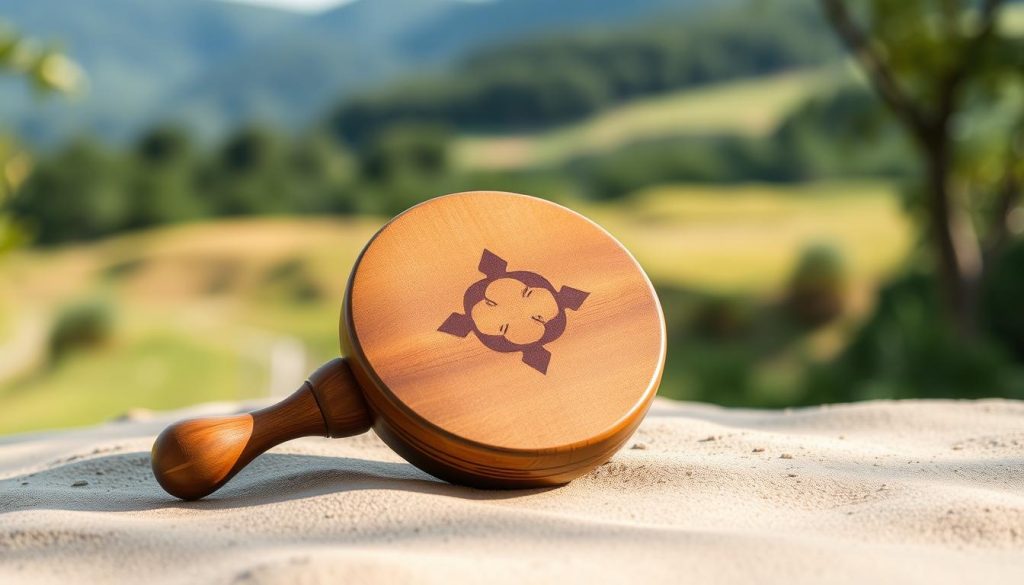
Useful accessories and basic care for consistent sound
Good equipment extends the life of your instrument and keeps its sound consistent.
Mallets: choose felt heads for a gentle, enveloping sound. Silicone mallets offer greater clarity without harshness. Choosing the right pair makes the instrument easier to use and gives you better control of playing dynamics.
Protection and stand: a reinforced, temperature-regulating case protects against knocks and changes in humidity. An adjustable stand positions the instrument at navel height to limit tension and stabilize sound projection.
Tuning and tempo: use a tuning app and a quiet metronome at 50 to 60 BPM to guide your practice without rigidity. Checking the tuning every three months helps prevent major deviations.
Care: wipe the instrument with a microfiber cloth after each use. Apply beeswax once a month and store the instrument at 45 to 55% humidity.
- Avoiding moisture and abrasive surfaces helps preserve the instrument’s stability for years.
- A well-maintained instrument contributes to stress reduction and improves session quality.
- For song ideas and other similar instruments, also explore the kalimba category.
“A simple care routine each week ensures consistent sound and lasting enjoyment.”
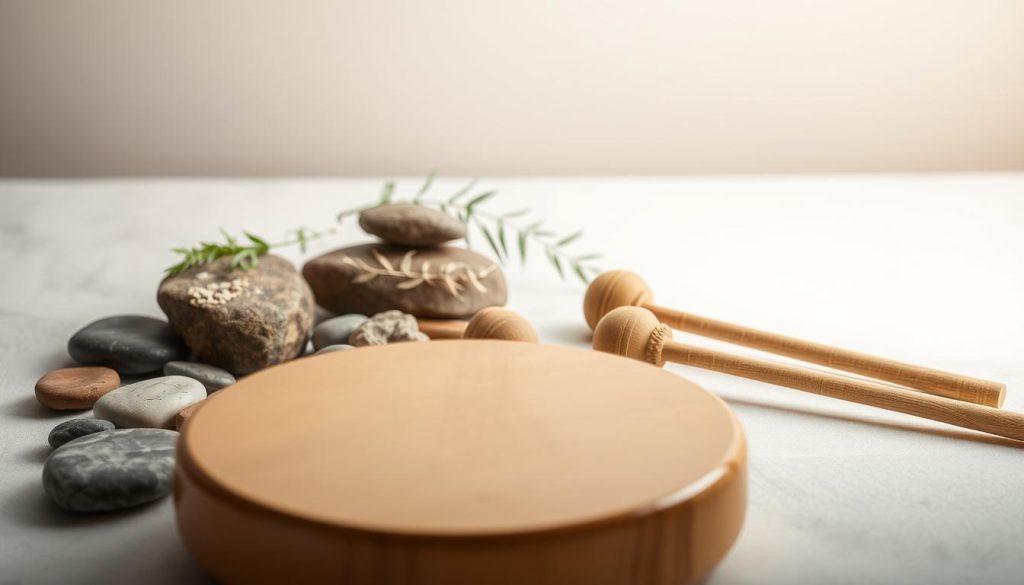
Make musical meditation part of your routine in France today
Short sound sessions help establish a daily practice without disrupting your schedule. Studies show that 7 minutes can produce measurable effects and that adherence increases by 74% compared with silent meditation. See the protocols and data.
Short sessions of 7 to 10 minutes morning and evening
Structure your day: practise for 7 to 10 minutes in the morning and evening, and plan a short midday session to realign your breathing and concentration.
In the morning, play low notes at random for 3 minutes to synchronize your breath, then play a slow pentatonic pattern for 4 minutes.
Combine it with yoga nidra, qigong and breathing
Pair yoga nidra with sustained low tones to help you fall asleep, and qigong with cycles of 4 to 6 strikes to synchronize movement.
These wellness practices complement meditation and strengthen the connection between body and mind.
Practice journal and progress over 30 days
Record the duration, your favourite notes, your pulse and the quality of each session. Review your progress each week and increase the duration in steps of 1 to 2 minutes.
To learn how to use the method every day, choose simple sequences and a compact instrument with a case for breaks at work.
Conclusion
This instrument turns a few minutes of daily practice into measurable benefits for body and mind.
Evidence shows a clear reduction in stress and anxiety, lower cortisol and better sleep after short sessions. Use tempos of < 60 BPM, pentatonic cycles and C–G / D–A fifths for a steady effect.
Choose 9 to 11 notes, a diameter of 30 to 33 cm, and felt or silicone mallets. Care for the instrument with a cloth and wax, and check its tuning regularly.
For a 30-day programme and practical advice, see this dedicated tongue drum guide. Start with short sessions, practise consistently and pay attention to how you feel.